Government vs Private Colleges in India: Which One Is Better for Your Career?
Understanding how government and private colleges differ in academics, exposure, placements, and career outcomes to help you make the right choice

Understanding how government and private colleges differ in academics, exposure, placements, and career outcomes to help you make the right choice
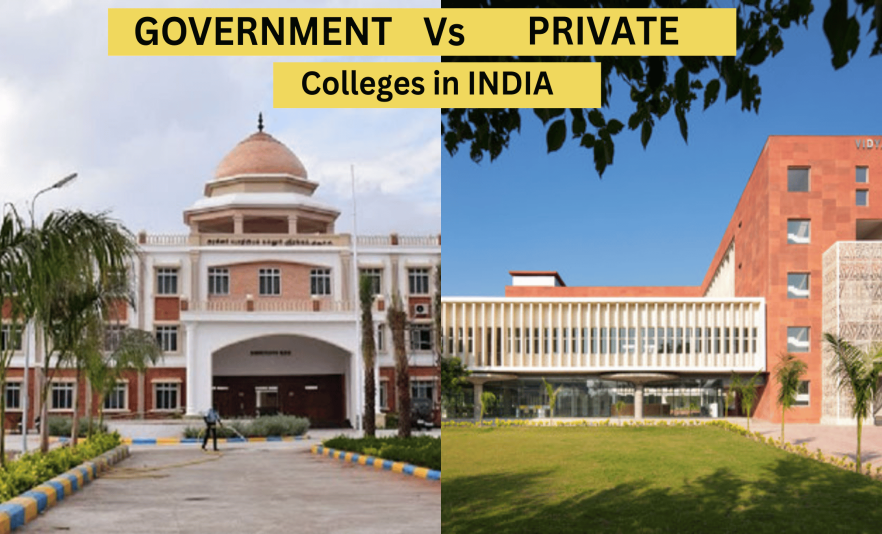
One choice can practically make or break the entire career trajectory of a student. College is a big decision, and it is going to shape the next four to five years of a student’s life. You can’t get caught in the endless debate of whether a government college is better than a private one, or where you can find an advantage financially. Today, the cost of education is skyrocketing faster than inflation, job markets are getting more competitive with each passing day, and therefore it’s important to keep an idea regarding the smart investments on education.
The funding structure and the management are the fundamental differences between government and private colleges. Since Government colleges are affordable and accessible to a larger group of people, they remain crowded. Managing the bunch of students gets a bit difficult as well. Whereas the Private colleges operate independently. It’s their funding, and so there is modern infrastructure and specialised programs. There are better possibilities of placements in private colleges.

It’s important to understand that a student's college fees are not just for the education but also for the overall experience that includes career opportunities, engagement with the top companies, and ROI in the long-term, larger picture. Therefore, if you are about to look for the best college type in India, between private college vs government college, examine the costs, outcomes and values they deliver.
Between a private college vs government college, it is a tough call. Government Institutions play their cards in building a reputation with low fees, whereas the debate intensifies with private institutions’ hefty investment in amenities and modern infrastructure. Let’s analyse it more deeply.
Most of the private colleges invest in comfort, and that includes advanced labs, air-condition rooms, smart learning with aesthetic campus life. This surely amplifies the everyday experience for the candidates.
The industry aligned curriculum is updated very frequently as per the industry requirements, especially in the private colleges. Fields like digital marketing, technology, data science and business analytics are very flexible and are getting advanced almost every day.
Individual faculty interaction is more with the smaller class size. Hence, personalized monitoring and learning support often thrive for these kinds of smaller environment approaches along with super placements in private colleges.
All these advantages definitely have a cost. Based on your learning, lifestyle and financial capacity, choose the best college type in India.
For most Indian families, the fee structure remains the deciding factor. Most of the lower middle-class people face disappointment due to dramatic differences across courses and the types of institutions.
Let’s figure out the fee comparison of colleges in India and also the cost of education for various courses below.
Let’s talk about the government colleges in West Bengal first. For B.Tech programs, the fees vary from ₹10,000 to ₹60,000 per year. Of course, it depends on the type of courses and institution. For the private colleges, it varies from ₹1.2 lakh to ₹4 lakh annually and with more premium institutes, it gets more.

Similarly, in places like Bengaluru, the fees for government colleges are less than those for private colleges. When the fees in government colleges are around ₹20,000 to ₹1 lakh per year, the fees in private institutions vary from ₹2 lakh to ₹5 lakh per year, especially for computer science and emerging technology programs.
For institutions like IITs, the annual fees is around ₹2.3- 2.5 lakhs.
One of the noticeable differences can be witnessed in medical education. MBBS colleges under the government charge from ₹5,000 to ₹1 lakh per year in both West Bengal and Karnataka. Well, that is how it gets accessible to a larger spectrum of students.

Again, for the private institutions for MBBS, it gets around ₹15 to ₹30 lakh per year under management quota seats for both West Bengal and Karnataka.
Government colleges in Kolkata and Bangalore charge around ₹20,000 to ₹80,000 annually for BBA and BCom courses, and the private college fees can reach ₹2.5 lakh per year, since it depends on a lot of factors like infrastructure, placement support and of course, the brand value.
Well, by now, we must have cleared the air on why students and parents run towards the government colleges, especially the middle class and people from economically weaker backgrounds. After looking into all the facts, let’s not just consider the money factor. Well, the learning approach, environment and the aspirants goal should be partnered with the desired opportunities and also the types of programs.
They offer exciting advantages beyond the modest and low-fee structure. Let’s examine the government college benefits below and see if these can be adjusted with your line of interest.
When we talk about the top institutions, including NITs, IITs, or other significant and established state and central universities, we are talking about the incomparable credibility they hold. These matters when you apply for jobs or during the campus placements, both in India and internationally.
A long established framework for academics is used by the government colleges, which are regulated by UGC, AICTE and other legal bodies, so that consistency and the standards remain at the top priority.
Government institutions allure students from diverse backgrounds, communities and states. This creates cultural diversity, awareness, network as well as a wealth of learning environment for the students and works in favour of government college benefits.
The financial risk is always lower. It’s the safest option to select since not a lot of money is at stake. If at any point of time you change your mind to shift to a different program, it will be easier for you at least from this perspective. It’s one of the biggest government college benefits.
One of the biggest advantages is the placements in private colleges. Career-focused students get attracted by the aggressive marketing of the private institutions. But ensure to verify those claims before putting your money.
Private universities are very much upfront in maintaining a decent placement cell, for internships, fairs and campus recruitments that gives immense exposure to the students. Top companies in sectors like finance, analytics and many more show interest in the students from premium private universities with a great grade.
Compared to the government institutions, top private colleges make a huge impact due to brilliant campus placement and placement cell and successfully achieves amazing outcomes.
When it comes to the lower tier private colleges, they do struggle in giving the students proper counselling despite all sorts of promotional claims.
Government premium institutions like IITs, NITs maintain a strong and steady placement record. Keep in mind and study hard since the median package is around ₹8-15 lakh per annum or higher, depending on numerous factors.
When you are balancing between the board results, filling applications, and taking the pressure of the entrance examination, you need someone to guide you throughout the procedure, and that is when Promote Education can help you out. With personalized guidance, form-filling, college insights that align with your budget and interest, comprehensive college comparison, and admission guidance, all will be taken care of by the experts and top-rated counsellors of the country.
Still confused about which college is better in India, between government vs private colleges?
Reach out to the leading educational consultancy today and save yourself from the hassle of putting extra effort into surfing the internet for the ROI of college education.
The decision is up to you about which college fits your preferences between government vs private colleges. It’s not necessary that the best college in India will turn out to be your best choice. Therefore before finalising your decision, consider all the requirements, interests and verify your expectations and most importantly ROI of college education.
Students and parents must evaluate carefully between government vs private colleges. The thought about which college is better in India will constantly be in our minds since it's a big career-related decision, and a fruitful future is all we want.
The job industry is developing at high speed, and therefore, we need to move fast as well. You need to keep on constantly brushing up your knowledge, education and skills. Keep on trying and turning every minute of hard work into something precious.
All the Best for your Final Examination.
Also Read: Crack the JEE Exam: Ultimate Guide for Aspiring Engineers
Excellent education is offered by the top government institutions like IITs, NITs and that too at a really low cost. Not only this, they have set a mark for amazing placements as well. Although these are India’s top institutions, where the top students from the country compete to earn a seat. However, for the private colleges. Apart from quality education, you can find modern infrastructure and industry networking. Compare your needs and interests and then decide where you really want to be.
Well, it varies depending on the type of institution and course one is choosing. Private colleges do have dedicated placement cells, but the government colleges are no less. Before selecting any of these from the two, ensure to verify the marketing claims.
No. The better your marks are, the better college you get to get in. There are numerous government institutions providing amazing academic standards, strong faculty, great research opportunities at comparatively lower fees structure. Hence, it’s up to you what your requirements are while choosing the best college type in India.