CUET (UG) 2026 Registration: Complete Guide (Dates, Fees, Documents & Steps)
Everything you need to apply on the NTA portal—eligibility, subject selection, upload sizes, fee payment tips, correction window, and key timelines.

Everything you need to apply on the NTA portal—eligibility, subject selection, upload sizes, fee payment tips, correction window, and key timelines.

The portal is officially active, and as expected, the servers are currently buzzing with activity for CUET UG 2026. Since it is already February 2026, the deadline anxiety is becoming very real for everyone with the CUET registration 2026. You might feel the rush building up because lakhs of students are logging in at this very moment. They are all doing one thing: they are desperately securing their future. While Delhi University is the primary goal for many, BHU is also a major target. But the form is quite long, and unfortunately, it is also slightly confusing to navigate. One single mistake can cost you dearly, because uploading the wrong document is fatal for your chances. Your application could get rejected, and obviously, we do not want that to happen. This guide is your safeguard to prevent errors, so we will walk you through the entire process with this CUET form-filling guide. Every single step is covered in detail; we will check your documents, and we will clarify the fees. This is a live walkthrough, which ensures you finish correctly and stress-free.
The concept is quite revolutionary in the education sector because it stands for the Common University Entrance Test. This is the Undergraduate version, and the National Testing Agency conducts it annually. They manage the entire process seamlessly, acting as a single entrance test for everyone. It covers all Central Universities, while State universities also accept it now, and even private colleges are joining too. It replaces the old system, so think about the past chaos we endured. Cut-offs were impossibly high, and board marks defined your fate entirely. One bad exam ruined everything, but that system is now gone. CUET (UG) levels the field for all students because it tests your domain knowledge specifically. It tests your general aptitude, and importantly, it ignores your board percentage. You just need to pass 12th grade, because the score is what matters now. It acts as a valid currency that you use for admissions, and it works across the country.

The importance cannot be overstated because it is the only path forward for CUET UG 2026. Top colleges have no alternative route, and direct admissions are largely gone. This matters for your comfort because you take only one exam. You pay fees only once, and you do not travel endlessly between cities. Previously, you ran around cities and wrote multiple entrance tests for each college. Dates often clashed with others, but now, everything is streamlined perfectly. This matters for fair play, whether you are a student in a village or a student in a metro. Both face the same test, and the difficulty level is standardized for fairness. The "NTA Score" is universal, and universities trust this specific score implicitly. It simplifies the merit lists and removes admission bias effectively. In 2026, the stakes rose even higher because more universities joined the list. Ignoring this is not optional anymore; in fact, it is your career lifeline.
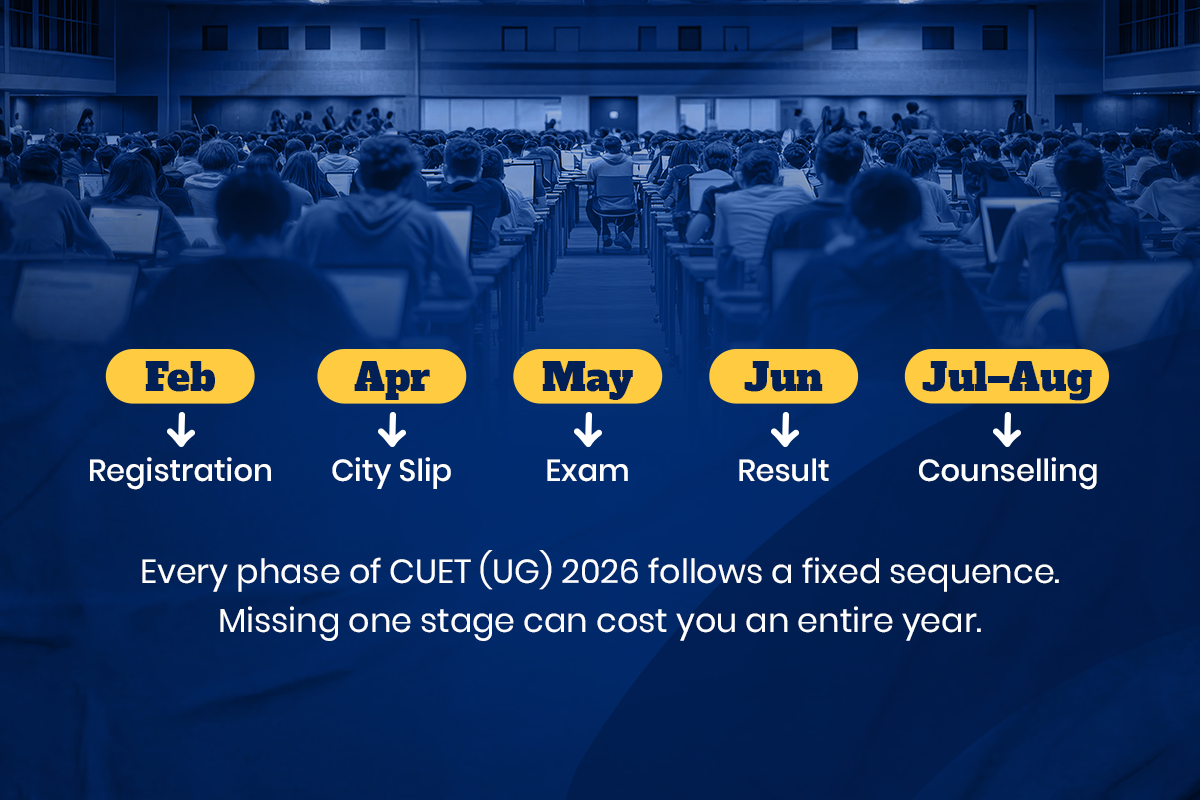
The mechanics are quite unique, and the 2026 model is primarily Computer-Based Test (CBT). This is a major update to note because most papers are CBT across multiple shifts, with normalization applied to balance difficulty levels. First, you register online via the CUET registration 2026, and you get an application number. Then you choose your subjects carefully before you sit for the exam. It happens in May 2026, specifically, the dates are May 11-31. After the exam, you wait for the outcome because the results come in June. Then counseling begins separately, and universities release their own lists. They use your NTA score for ranking, but they do not conduct exams themselves. The process is decentralized later, but the exam is centralized now.
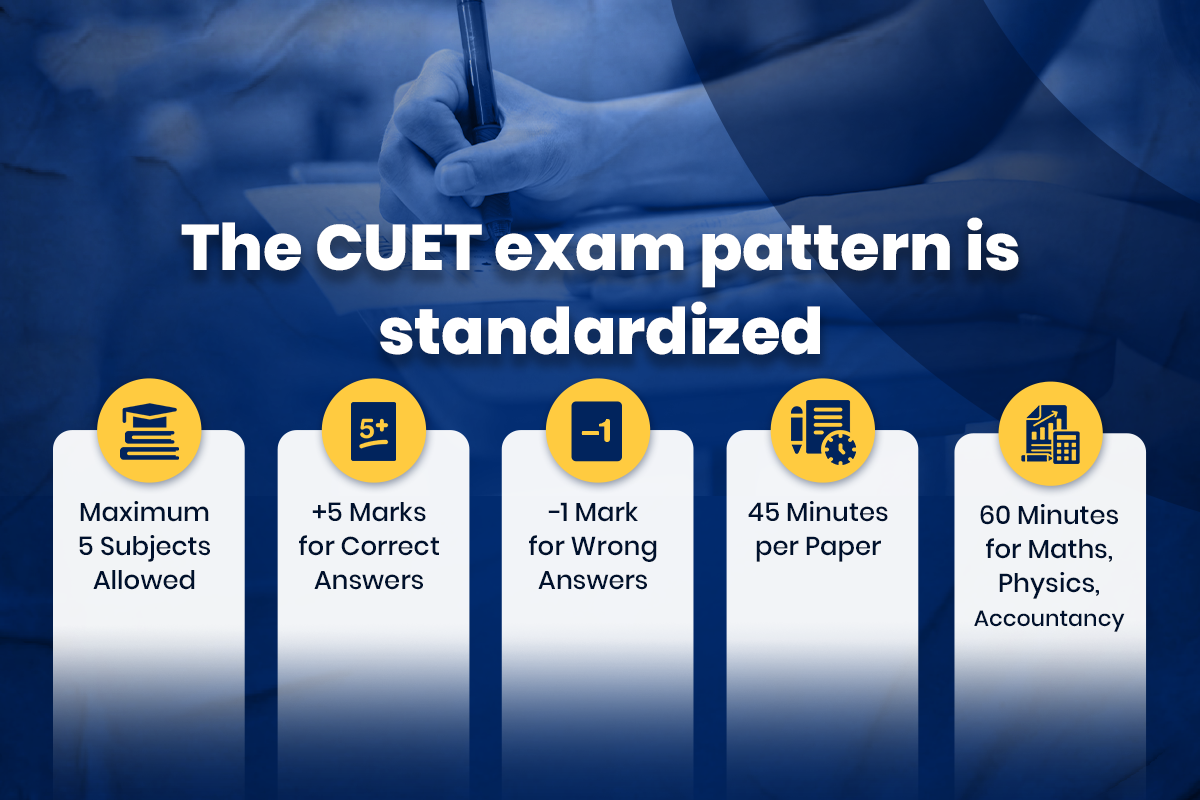
The pattern has specific rules, and you must follow them strictly. Let us look at subjects: the limit is now five subjects. You can choose a maximum of five subjects, and this includes languages and domains. Previously, it was higher (up to six or ten in past years), so this reduction reduces your stress significantly. You must choose wisely, and one language is usually mandatory. The General Test is optional, but many courses require it for eligibility. The marking scheme is also clear: you get +5 marks for correctly answering, but you lose -1 mark for wrongly answering. Negative marking is very real, so be careful. Unanswered questions score zero, and the duration varies by paper. Most papers are 45 minutes, but Math and Physics get 60 minutes each, and this is because of calculations. Accountancy also gets 60 minutes. Shifts are planned daily, meaning there are multiple daily shifts, so normalization might still apply as it balances the difficulty levels.
This exam targets specific groups of aspirants.
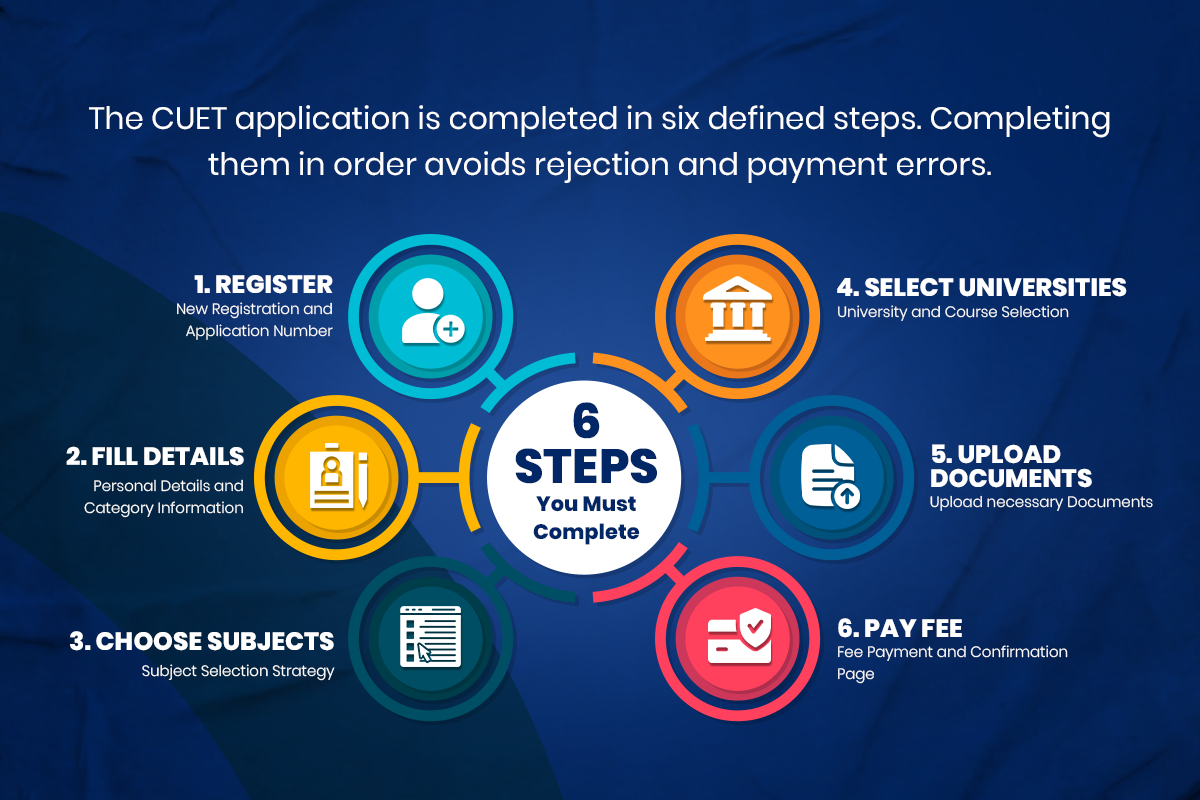
The form was live until February 4 (now closed for new registrations), with fee payment open till February 7. Let us break it down and follow this exact sequence using our CUET form-filling guide.
This is the most critical step because you have five slots.
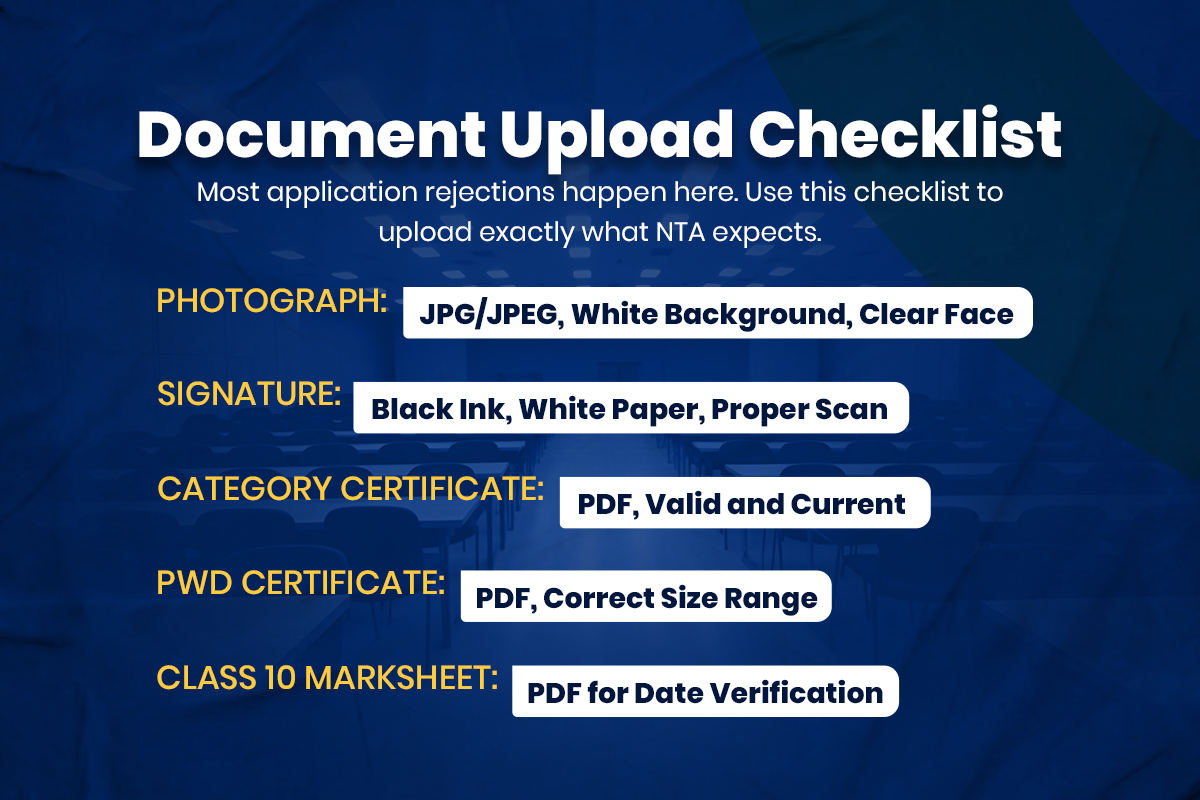
You must scan these beforehand and keep them ready in a folder.
The system has some flaws, and you must be aware of them.
Registration closed February 4 (11:50 PM IST) for CUET UG 2026, although extended dates happen often. Fee payment ends February 7, and then comes the Correction Window. This opens from February 9 to 11, where you can fix small errors. You can add universities, and you can add subjects, but you cannot change your name. After that, the City Slip arrives in late April, and it tells you about the city. Then the Admit Card arrives, which comes in May. The exam starts on May 11, so the roadmap is very clear, and the clock is ticking loudly.
CUET (UG) 2026 is live, and the opportunity is right here with CUET registration 2026. The process is slightly tedious, but the reward is huge. You get a fair shot, and you get a fresh start. Forget your pre-board marks and focus on this form (or prep/corrections now). Follow the steps we listed and check your documents twice. Pay the fee on time and do not delay until tonight. Complete payments or corrections soon to secure your eligibility now, because your dream college is waiting.
This guide offers general information only. All dates, fees, limits, and details are approximate. Always verify official websites for the latest official updates. No guarantees or claims of accuracy are made. Use at your own discretion—we recommend cross-checking with verified sources.
The guide notes registrations were open till Feb 4 (around 11:50 PM IST); always confirm any extensions on the official portal.
Fee payment may stay open a few days after registration closes (example: Feb 7). Check the portal before paying.
Usually no NTA age limit, but universities may have course-wise rules—verify your target university eligibility.
The guide highlights up to 5 subjects total (including language + domains + General Test if chosen).
Not always, but it can increase eligibility options, depending on universities/courses.
Photo/signature (JPG/JPEG), category/PwD certificates (PDF if applicable), Class 10 marksheet (PDF) + other required proofs—keep them within size limits.
Wait for status update (often up to 24 hours). Avoid repeated payments unless needed; duplicates are usually refunded as per portal flow.
A short correction window typically allows limited edits (like adding universities/subjects). Identity fields are often locked.
The guide suggests late April (city slip) and May (admit card). Dates can change—track official updates.
The guide mentions a May exam window (example: May 11–31) in CBT mode; confirm via admit card.
Name mismatch with Class 10, low-quality scans, last-minute submission due to server load, wrong document uploads, and incomplete details.
Yes, but subject/course mapping varies by university—verify course eligibility rules.