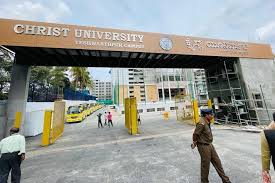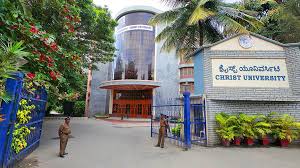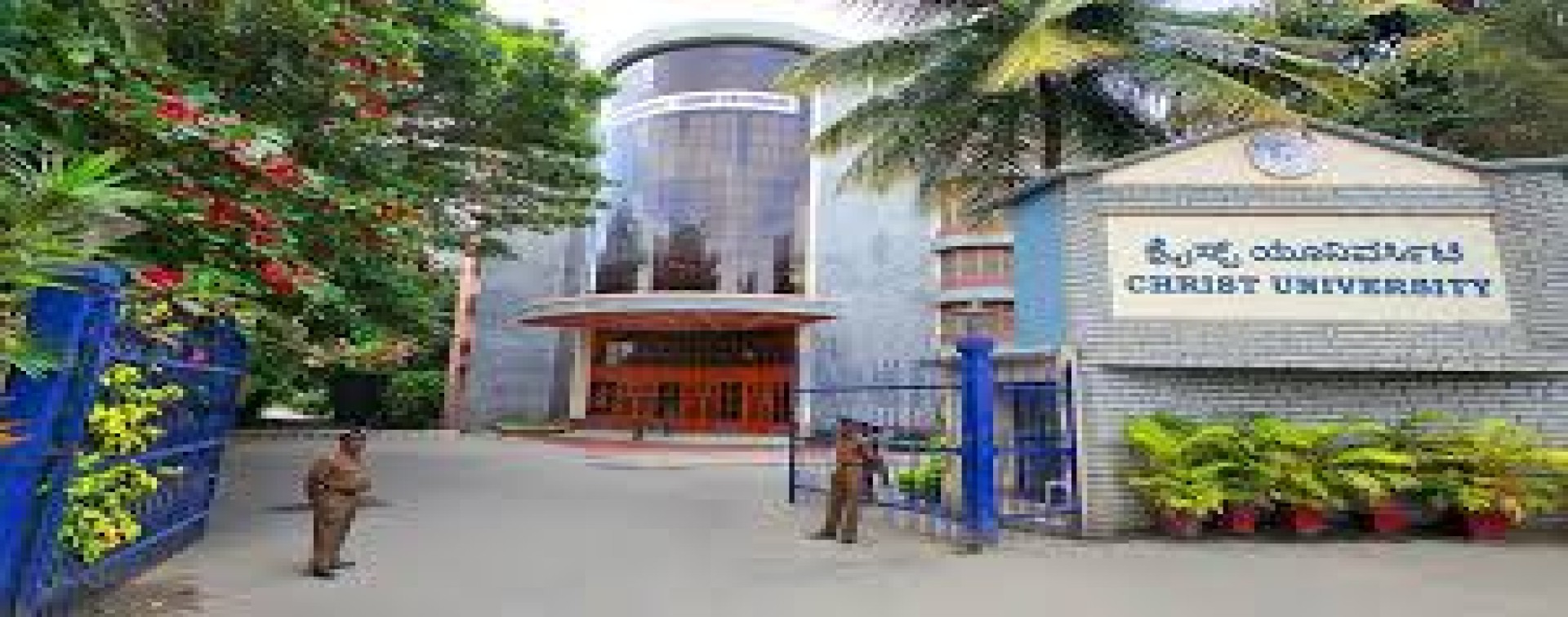
Christ University
- DHARMARAM COLLEGE, Hosur Main Road, Bhavani Nagar, Post, Bengaluru, Karnataka 560029
- 4.8/5 (1 Reviews)
- Private Institute - Estd. 1969
Christ University is a multi-disciplinary, multi-campus institution known for structured academics, holistic education, and a strong student community. This overview helps you understand “fit” quickly—campus options, academic culture, and what the admission journey typically looks like.
Data sources used here: official Christ University pages and NIRF ranking pages (linked via citations in this content).
CHRIST (Deemed to be University) began as Christ College (1969), received autonomy in 2004, and was declared a Deemed-to-be University in 2008 under Section 3 of the UGC Act, 1956. The institution emphasizes academic discipline, modern curricula, and holistic development.
Verified from the university’s official “History & Milestones” page. :contentReference[oaicite:1]{index=1}
Student scale, NAAC A+, and deemed status details are from official university information; vision/mission appears in the university’s NIRF 2024 page. :contentReference[oaicite:2]{index=2}
Christ University offers programmes across multiple campuses. Most students shortlist first by programme availability, then by campus location (commute/hostel), and finally by the academic environment of that campus.
Official campus list + Yeshwanthpur establishment year. :contentReference[oaicite:3]{index=3}
Official campus list also confirms Delhi NCR and Pune Lavasa. :contentReference[oaicite:4]{index=4}
Tip: When you shortlist, confirm the exact campus for your programme on the programme page before applying.
Christ is a multi-disciplinary university offering UG, PG, and Doctoral programmes across streams such as humanities, social sciences, sciences, commerce, management, engineering, architecture, education, and law.
Schools list appears on official site navigation and programme pages. :contentReference[oaicite:5]{index=5}
Official statements about academic discipline/holistic education and focus on teaching-research-service are documented in university pages. :contentReference[oaicite:6]{index=6}
A key differentiator at Christ is the focus on co-curricular learning through centres and student platforms. This helps students build communication, leadership, social responsibility, and domain exposure beyond academics.
If you prefer a campus with more space or different facilities, compare Bengaluru campuses (Central, BGR, Kengeri, Yeshwanthpur) based on your programme and day-to-day needs.
NIRF ranks are verified from the official NIRF University ranking pages; NAAC grade is stated on the university history page. :contentReference[oaicite:9]{index=9}
Admission at Christ is programme-specific. For many UG programmes, the selection process commonly includes: Entrance Test (ET) + Skill Assessment (SA) + Micro Presentation (MP) + Personal Interview (PI). Some programmes may have additional components (for example, audition where applicable).
:contentReference[oaicite:10]{index=10}
:contentReference[oaicite:11]{index=11}
Best practice: shortlist 2–3 programme/campus backups and prepare early for SA/MP/PI (communication + clarity + basics of your chosen stream).
Share your course preference, budget, and city preference—Promote Education will help you pick the right campus + programme, and guide you through the application/selection process planning.
Christ (Deemed to be University) accepts applications online only. Depending on your programme, selection may include an Entrance Test (ET) and/or Skill Assessment (SA), Micro Presentation (MP), Personal Interview (PI) (and audition for specific programmes). Always confirm the exact process on your programme page before applying.
Note: Dates/process are based on official 2026 selection process pages & PDFs. Verify latest updates on the official website before final submission.
The selection route depends on your programme. Some programmes have an Entrance Test (ET); others are Non-ET (selection via SA/MP/PI and/or audition where applicable).
Source: official ET selection process & guidelines.
Source: official selection dates note.
Christ University requires candidates to apply online only. You create a one-time registration ID, then apply for the programme and campus of your choice. Be careful: some personal details cannot be edited after submission.
Register with your name (as per Class 10 certificate), email, mobile/WhatsApp number, DOB, and password. Verify via OTP.
Select the programme and preferred location/campus. Confirm eligibility criteria on the admissions/programme page before proceeding.
Complete personal/parent/education details and upload required marks cards. Unclear/missing documents may lead to “Not Eligible”.
Choose available selection process date/venue options shown in the portal (programme-specific).
Complete payment as per portal instructions and keep checking your application status for selection details.
References: UG application instructions + “how to apply” steps PDF.
Apply Online (Official) • Use this to submit and track your application.
Source: official selection process (UG ET).
Source: official guidelines & dates page.
Source: official UG ET pattern & guidelines PDF (2026).
Source: official guidelines in UG ET pattern sheet (2026).
Christ University publishes selection process calendars. Below is a simplified snapshot (Selection Process I & II are listed on the official page). For your exact programme, follow the dates shown for ET / Non-ET and the admit card release.
Source: official “UG/PG Selection Process Dates 2026” page.
Selected candidates receive an E-Offer of Admission valid until the date mentioned in the offer. Admission is typically provisional and depends on meeting programme eligibility and document verification.
Source: UG admission process page.
Source: UG admission process page.
Source: official Selection Process 2026 detailed info page.
During the on-campus admission process, candidates are asked to bring mandatory original documents and a full set of black & white photocopies (xerox) as listed by the university.
Source: UG admission process page.
Source: UG admission process page.
Sources: official guidelines + application instructions.
Tell us your course preference, campus location (Bengaluru/Delhi NCR/Pune), and your profile. Promote Education will guide you on the correct selection route (ET vs Non-ET), timeline, and document readiness.
CHRIST (Deemed to be University) offers a wide range of programmes across multiple campuses. Course availability can vary by campus and intake—use this tab to shortlist the right stream, then verify the latest eligibility, dates, and curriculum on the official programme directory.
Use this quick checklist to shortlist programmes that match your goals (job-ready / research / entrepreneurship / international pathway).
High-demand UG options students commonly shortlist at Christ University (examples; not exhaustive).
UG • Engineering & Technology
Popular options include Computer Science & Engineering, Electronics & Communication, Electrical & Electronics, Mechanical & Automobile, Civil, and emerging areas such as AI & Data Science (as available by campus).
UG • Business & Management
Designed for business fundamentals + leadership skills. Many BBA tracks include modern modules like strategy, analytics, and global business exposure.
UG • Commerce / Finance
Strong fit for students targeting accounting + finance roles, analytics-led commerce careers, or professional certifications alongside graduation.
UG • Computer Applications
Ideal for students who want a software-oriented UG pathway—programming fundamentals, application development, and job-ready tech skills.
UG • Psychology / Social Sciences
A strong foundation for careers in counselling, HR, research, and behavioural sciences—often with interdisciplinary combinations depending on the programme.
UG • Data / AI
Built for analytics and modern computing skills—often blending core CS foundations with data science, AI/ML concepts, and project work (programme-dependent).
UG • Law
Five-year integrated pathways combining law with arts/management—commonly shortlisted by students aiming for litigation, corporate law, or judiciary prep.
UG • Architecture
Studio-driven learning for students passionate about design, built environment, and sustainable architecture (availability depends on campus/intake).
Common PG options students consider for career acceleration, specialisation, or research (examples; not exhaustive).
PG • Management
A flagship management pathway for leadership roles—ideal if you want structured exposure to strategy, marketing, finance, operations, and analytics.
PG • Computer Applications
Designed for advanced software/application development skills—often chosen by BCA/BSc grads aiming for higher roles in tech and product teams.
PG • Psychology
A practice-oriented pathway focused on counselling skill development, supervised learning, and professional readiness (programme structure varies by campus).
PG • Commerce / Law / Architecture (examples)
Christ also offers a wide spectrum of specialised PG programmes across disciplines. Use the official PG directory to filter by school, campus, and eligibility.
Doctoral programmes are available across multiple disciplines. Requirements typically include a relevant master’s degree, research proposal, and selection as per university norms. Always verify the latest department-wise openings and dates on the official programme directory.
Doctoral • Research
Choose your research area, shortlist the department, and check campus-specific availability and timelines via the official doctoral listings.
Quick note: This tab lists popular options to help you shortlist. For the complete and latest programme list, use the official UG/PG directories linked above.
Fees at CHRIST (Deemed to be University) vary by programme, campus, and student category. Use this tab to understand what you pay, when you pay, and how refunds work—then verify the exact programme-wise fees on the official fee-structure page.
For international admissions, the University notes that the fee approved at admission is binding for the programme duration (as per their international admissions information).
Always cross-check the final fee on the official CHRIST programme fee structure before you pay. This tab is meant to be a clear guide for students/parents—not a substitute for official fee notifications.
| Component | What it means | Notes |
|---|---|---|
| Application fee | Paid while submitting the application. | Varies by programme, up to ₹1,800; non-refundable after submission. |
| Admission registration fee | Paid after selection while processing admission. | CHRIST FAQs mention ₹5,000 as a non-refundable admission registration fee, paid along with first-year programme fee. |
| First-year programme fee | Your academic fee for Year 1 (tuition + academic services as defined by the programme). | FAQs state first-year fee + admission registration fee must be paid in full while processing admission. |
| Hostel / accommodation (optional) | Residence/hostel fee + security deposit + application/processing (varies by hall/campus). | See examples below (indicative). |
Admission guidance also references paying admission-related fees through digital modes (e.g., NEFT/RTGS/Net Banking/Credit Card) during admission steps.
Below is an official programme-specific example (MBA @ CHRIST — Bengaluru, as shown in the MBA 2026 document). Use this to understand how CHRIST publishes fees across categories.
| Category | Year I | Year II |
|---|---|---|
| Karnataka | ₹5,70,000 | ₹5,70,000 |
| Other Indian States | ₹5,90,000 | ₹5,90,000 |
| NRI | ₹7,00,000 | ₹7,00,000 |
| SAARC / AFRICA / PIO / OCI / ASEAN | ₹7,50,000 | ₹7,50,000 |
| International | $8,000 | $8,000 |
Source: CHRIST “MBA 2026” document (programme fee table).
These points are stated in CHRIST’s refund regulation documents and also summarized in the Student Handbook.
| When you apply (relative to last date of admission) | Deduction | Refund |
|---|---|---|
| 15 days or more prior | Lower of ₹5,000 OR 5% of course fee | 100% |
| Less than 15 days prior | 10% of course fee | 90% |
| Within 15 days after | 20% of course fee | 80% |
| Up to 30 days after (but more than 15 days after) | 50% of course fee | 50% |
| Beyond 30 days after | 100% of course fee | 0% |
Refund timelines are typically mentioned as being processed within a defined working-day window (see official regulation).
Hostel/residence hall fees differ by campus and facility type (sharing, attached bath, services, etc.). Below are examples from campus accommodation PDFs (indicative for the mentioned year/hostel).
| Facility / Campus | Room type | Indicative total |
|---|---|---|
| Bannerghatta Campus accommodation | Triple sharing (Hostel fee + refundable deposit) | ₹33,000 (₹28,000 + ₹5,000) + processing fee (as applicable) |
| CHRIST Residence Hall (Women) — Delhi NCR | Triple sharing (hostel fee + security deposit + application fee) | ₹1,36,000 (₹1,20,000 + ₹15,000 + ₹1,000) |
| Ezstays (Delhi NCR partner accommodation) | Single (hostel fee + security deposit) | ₹2,90,000 (₹2,80,000 + ₹10,000) |
Sources: Accommodation fee PDFs for the referenced campus/halls.
Disclaimer: Fees and policies can change. Always confirm the latest programme-wise fee structure and official regulations on CHRIST (Deemed to be University) portals before payment.
This tab is designed to help you understand how placements work at CHRIST, what the latest public outcomes look like (using NIRF 2025 submission data), and how to prepare for campus recruitment across UG/PG programmes.
Note: “Median salary” is the middle value (less affected by outliers than “highest package”). Outcomes vary by programme, campus, student profile and year.
The figures below come from publicly available NIRF 2025 submissions for CHRIST and include “Placement & Higher Studies” for AY 2023–24 (where reported). Use this as a trustworthy baseline, then verify your specific programme’s brochure/report for the most current drive details.
| Programme group (NIRF submission) | Graduated (min. time) | Placed | Median salary (₹/year) | Higher studies |
|---|---|---|---|---|
| Engineering — UG (4 years) | 465 | 321 | ₹8,75,500 | 62 |
| Management — PG (2 years) | 1126 | 1027 | ₹9,86,000 | 16 |
| Overall — UG (3 years) | 5056 | 2783 | ₹5,36,000 | 2039 |
| Overall — PG (2 years) | 3495 | 3247 | ₹6,65,000 | 134 |
Engineering/Management submissions are discipline-specific; “Overall” combines multiple streams, so medians and volumes will differ.
CHRIST’s Placement Office supports career planning through counselling and employability training, and campus recruitment typically begins with a pre-placement talk followed by assessments (written test / GD / interviews), with student placement representatives assisting during the process.
Tip: For many roles, consistency in aptitude + communication + projects beats “one-time prep”.
The Centre for Placements and Career Guidance (CPCG) is positioned as a bridge between students and professional opportunities, with counselling and training across resume writing, interviews, group discussions, and aptitude/logical reasoning.
If you’re in early semesters, start building proof-of-work: internships, projects, competitions, research.
Recruiters vary by programme and year. Below are examples of organisations listed in an official university document (“List of recruiters 2013–2014” – CUIM). Use these as a reference for the breadth of sectors, not as a guarantee of current-year participation.
Want the most current list? Check programme-specific placement brochures/reports under CPCG/School pages and your department notices.
For programme-wise placement communication, always prefer official emails listed on the university placement page.
Phone/office details are available on the official placements page.
Use the SBM placement office channel for MBA-specific drives and timelines.
Disclaimer: Placement outcomes depend on multiple factors (programme, skills, internships, market conditions). Figures shown here are from publicly available NIRF submissions and university pages; always verify the latest official brochure/report for your batch.
CHRIST (Deemed to be University) is a multi-campus institution with facilities that support academics, research, student wellbeing, and campus life. This tab gives you a people-first view of what’s available and what to check for your specific campus and programme.
Availability can vary by campus (Bengaluru campuses / Delhi NCR / Pune Lavasa). Use this snapshot as a guide, then confirm campus-specific access during admission.
| Area | What you get |
|---|---|
| Libraries & e-resources | Multi-campus library system with physical collections, reading spaces, internet/Wi-Fi access, and digital/remote access to e-resources. |
| Labs & learning spaces | Science and computer labs, engineering labs (campus/programme dependent), language labs, performance & media studios, and innovation/incubation facilities supporting research culture. |
| Sports & fitness | Indoor and outdoor sports facilities; coaching camps for select sports and annual/intra-university competitions. |
| Health & wellbeing | Medical centres with doctors/nurses and ambulance support; counselling and wellbeing specialists with professional confidentiality. |
| Hostel / accommodation | Secure accommodation options (campus-wise), CCTV/security; allotment/renewal typically linked with discipline and performance norms; dining through cafeterias/eateries. |
| Transport & mobility | University bus services for day scholars and for academic/industry visits (where applicable), plus inter-campus visits. |
Tip: Ask for the latest campus handbook / facility rules during counselling.
We help you shortlist the right CHRIST campus + programme and map your day-to-day needs (hostel, commute, labs, placement readiness) before you finalise.
CHRIST campuses host multiple labs and specialised spaces aligned to each School—supporting hands-on learning, projects, and research outcomes.
Best practice: If your course is lab-heavy, ask your department about lab hours, equipment access, and project support.
Many campus operations are supported by IT services—digitised systems for access, administration, online learning, and campus-wide infrastructure support.
The University library network supports coursework, competitive exam prep, and research through a mix of print collections, journals, e-resources, and internet-enabled study spaces.
If you’re research-focused, ask about database access, repository, and inter-library services.
Great for group work: look for discussion spaces and e-resource access zones in your campus library.
CHRIST encourages holistic development with facilities for indoor and outdoor sports across campuses, plus coaching opportunities and annual sports festivals.
If sports matter to you, confirm the courts/fields available on your campus and team selection cycles.
Campuses are designed to host academic conferences, cultural events, and student activities—supported by seminar rooms, mini auditoriums, and large auditoriums on select campuses.
Ask your department about event access for clubs, fests, and guest lectures.
The University emphasises physical and mental wellbeing through on-campus medical support and counselling services.
For day scholars, check medical centre location and timings on your campus.
If you’re relocating, wellbeing support can be a big advantage during the first semester.
CHRIST provides campus accommodation options (campus-wise, limited intake). It’s best to opt during the admission process if you need hostel.
Always confirm the latest hostel rules, curfew timings, and guest policies for your campus.
If you have dietary needs, ask about vegetarian/other options available near your campus.
To support students and faculty, CHRIST offers bus services for day scholars and academic mobility needs.
Confirm routes, pickup points, and fee/registration process with your campus admin.
Disclaimer: Facilities and rules may change and differ by campus/school. Always verify the latest campus pages/handbooks on the official site.
This tab summarises public student feedback plus key official policies that shape day-to-day life (attendance, discipline, placements support). Experiences can vary by campus and programme—use this as a decision aid, not a guarantee.
Different portals show slightly different scores and sub-scores. Use the pattern, not the exact number.
Note: Reviews are self-reported. Some programmes/campuses receive more reviews than others, so results can skew.
Before you commit, read these policies once—many “review complaints” connect directly to them.
Best practice: ask your department office for the latest handbook for your campus/programme.
Fit check: disciplined structure helps some students thrive; others may find it restrictive.
Reviews about placements can be contradictory because recruitment outcomes depend on programme, year, internships, skills, and role preferences. Use “department-level proof” + official placement support structure to validate claims.
“You’ll get a structured academic environment and plenty of activity-based exposure—clubs, presentations, and events.”
“Attendance and discipline are taken seriously; it’s great if you like structure, tough if you want lots of flexibility.”
“Placements can be good, but your department, internships, and networking make a big difference.”
“Infrastructure and learning resources are generally rated strong; campus life is active with frequent events.”
This section is paraphrased (not direct quotes) to avoid cherry-picking single reviews. Always read a sample of recent reviews for your programme.
Disclaimer: This review summary is informational and based on public sources + official policy pages. Ratings and experiences can change over time.
🟢 High Ratings & Positive Points ✅ Infrastructure (4.5/5): This is one of the highest-rated components. Students consistently praise the university for its beautiful and modern campus, well-maintained buildings, advanced labs, and excellent library facilities. Crowd & Campus Life (4.4/5): Students appreciate the vibrant and diverse crowd at the university. Reviews often highlight the numerous events, clubs, and fests that contribute to a lively and engaging campus life. Faculty & Course Curriculum (4.1/5): The faculty is generally well-regarded, with many students finding them supportive and the curriculum to be up-to-date and relevant. Value for Money (4.2/5): A significant number of students feel that the education and overall experience they receive at Christ University are worth the fees. ❌ Areas for Improvement ❌ Placements (3.9/5): While many students report good placement rates, particularly for popular courses like MBA and BBA, this is a mixed bag. Some reviews note that placements can be "average" for certain departments and that the packages offered, while decent, are sometimes not as high as students would like. Rules & Discipline: Similar to other platforms, Shiksha reviews frequently mention the strict and rigid rules, including the compulsory 85% attendance, which some students find challenging and restrictive. Faculty Disparity: While the overall faculty rating is good, some reviews point out that the quality of faculty can vary between departments, with some professors being less approachable or helpful.
CHRIST is a multi-campus university with major campuses in Bengaluru (Central, Bannerghatta Road, Kengeri, Yeshwanthpur) and off-campuses like Delhi NCR and Pune Lavasa. Your facilities, fees, and placements can vary by campus and programme.
Applications are submitted online through the official application portal. After applying, you can track your application status and download your E-Admit Card using the official “Application Status” page and portal login.
Keep your basic academic documents ready (marksheets/grade cards as applicable), a passport-style photograph, and an online payment method (UPI / card / net-banking) for the application fee. Programme-specific uploads can vary, so check the programme page before submitting.
The official application queries page states the application fee varies by programme and is up to INR 1,800. Once submitted, the application cannot be cancelled and the fee is non-refundable.
The official FAQ clarifies that the non-refundable admission registration fee (₹5,000) is paid only after selection, while processing admission, along with the first-year programme fee.
As per the official FAQ, selected candidates typically pay the first-year fee in full along with the admission registration fee while processing admission (as per the offer instructions).
CHRIST publishes refund/cancellation regulations. A key rule commonly stated is that refunds are considered only for the academic course fee (as per policy), while no refund is allowed for the Application Fee and Admission Registration Fee. Always review the latest policy for your campus/session before paying.
CHRIST uses a structured selection process for many programmes: - Skill Assessment (SA): writing task on a given topic (time-limited) - Micro Presentation (MP): speak for ~90 seconds on a topic given by the panel - Personal Interview (PI): interview (often ~10 minutes; may vary) Some programmes also include an entrance test (often online) and/or audition, depending on the programme.
For several 2026 programme categories, official selection-process PDFs indicate: Entrance Test: Online, and SA/MP/PI: Venue-based (in person). However, some campus/programme processes can be online—always follow your E-Admit Card instructions.
Official selection documents state that the date/time is provided via the E-Admit Card, and admit cards are typically issued a few days before the scheduled date (as per the programme instructions). Check your application portal status regularly.
Official 2026 selection-process instructions state the selection date/time can be auto-generated by the system and requests for changes may not be entertained. Plan travel as per the official “Important Dates/Selection Process Dates” page.
CHRIST publishes an official page for UG/PG selection process dates (2026). Always refer to it for the most current schedules, and then rely on your E-Admit Card for exact timing and venue.
Yes—official General Regulations state students must maintain a minimum 85% attendance to be permitted to write examinations. Leave applications are typically considered only if actual attendance is above a stated threshold (per rules).
CHRIST’s campus pages and student handbook emphasise a disciplined campus culture and adherence to dress code and conduct norms. This can be a strong advantage for students who prefer structure—do a “fit check” based on your preference.
Hostel/residence facilities are available (campus-wise), but allotment is generally limited—apply early. Official hostel information notes admission is typically for one year, and re-admission depends on performance/discipline and participation.
Official “Hostel & Dining” information notes that mess facility is not available in residence halls. Students can use campus cafeterias and eateries.
Placements depend strongly on programme, campus, your skills, internships, and role preferences. Officially, CHRIST operates the Centre for Placements and Career Guidance (CPCG) that supports career guidance and recruitment facilitation. For a practical view, verify your department’s recruiter list and recent outcomes.
CHRIST’s official CPCG pages list contact details for UG/PG placement support (including email and phone). Use these contacts for placement verification, eligibility queries, and recruiter/process information.