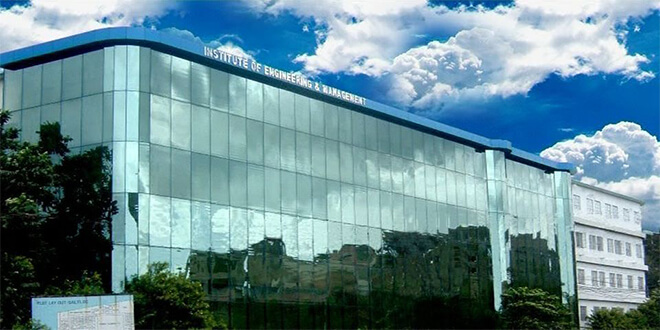
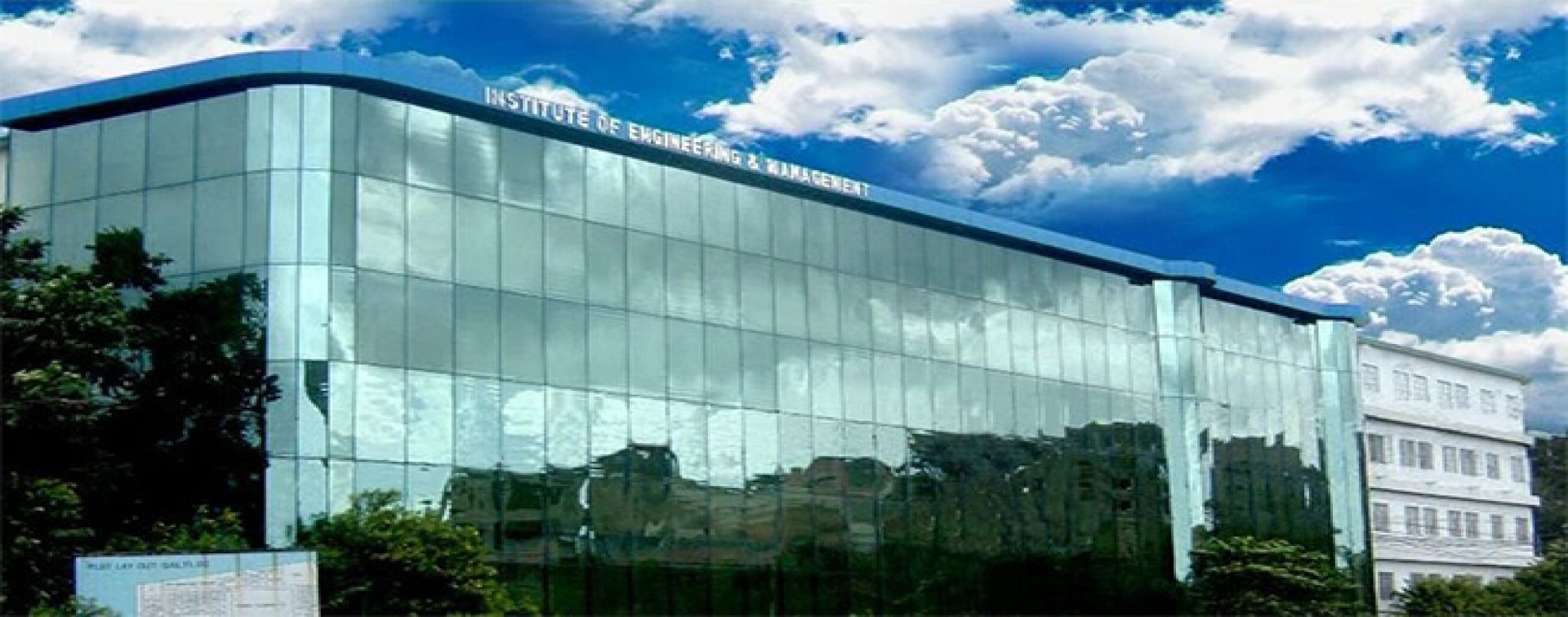
Institute of Engineering & Management

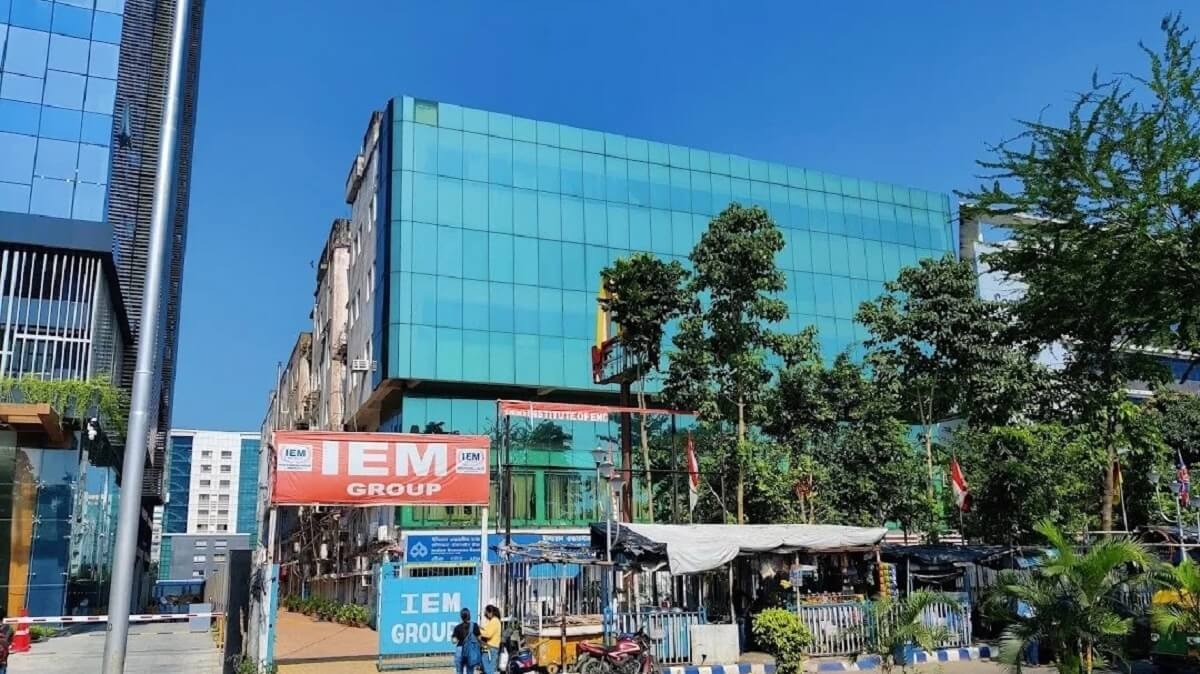
  • IEM Ashram Building, GN-34/2, Street Number 27, opposite to Nalban Saltlake Electronics Complex, GN Block, Sector V, Bidhannagar, Kolkata, West Bengal 700091
  • 0.0/5 (0 Reviews)
  • Autonomous Institute - Estd. 1989

Institute of Engineering & Management (IEM), Kolkata — Overview

Institute of Engineering & Management (IEM) is a co-educational institute in Kolkata’s Sector V (Salt Lake Electronics Complex), known for engineering and management education with structured industry exposure, active campus life, and career-focused support.

Sector V, Salt Lake (Kolkata) Co-ed UG & PG Affiliated to MAKAUT (WB) AICTE Approved Programs NAAC Grade “A” (as published) Central Library + Digital Resources

Why students shortlist IEM (people-first view)

If you’re comparing engineering colleges in Kolkata, these are the practical, decision-making points students usually care about.

Location advantage Sector V ecosystem makes it easier to access companies, events, internships, and tech exposure.
Academics + industry connect IEM highlights industry interaction and invited sessions with faculty/experts from top institutes.
  • Goal clarity: If your priority is placements, check latest recruiters, role types, and CTC distribution.
  • Branch fit: Compare labs, department activities, student chapters, and project culture for your branch.
  • Learning support: Ask about mentoring, internship guidance, and semester-to-industry alignment.
  • Cost planning: Look at fees + hostel/transport + exam costs and plan your budget early.

Tip: Keep screenshots/PDFs of official approvals and any published accreditation updates while you shortlist.
Quick Highlights

A fast summary for parents and students—use this to compare with other colleges in West Bengal.

Started IEM began in 1989 (management), with engineering introduced later (1996 at IIT Kharagpur campus, as published).
Accreditation NAAC Grade “A” is stated in IEM’s published updates.
Affiliation Affiliated to MAKAUT (formerly WBUT), as published by IEM.
Quality signals IEM states eligible departments are NBA-accredited (verify latest department-wise status).
Library strength Central library lists 7014 titles and a 24×7 reading room + digital facilities.
Placements (published claim) IEM states “approximately 100% placement” for engineering/management (always verify the latest report).
Salt Lake Electronics Complex Campus Cluster UG + PG ecosystem Placement cell structure mentioned by institute Central + departmental libraries

Programs & Departments (overview)

IEM publishes a broad mix of engineering, computing, and management programs. Final intake, eligibility, and specializations can vary year to year.

Engineering & Technology

  • Computer Science & Engineering (including specializations such as AI/ML, AI, IoT, IoT + Cyber Security/Blockchain, CSBS)
  • Information Technology (IT)
  • Electronics & Communication Engineering (ECE)
  • Electrical / Electrical & Electronics (EE/EEE)
  • Mechanical Engineering (ME)
  • Basic Science & Humanities (supporting foundation courses)

Management & Computing

  • Master of Business Administration (MBA)
  • Master in Computer Applications (MCA)
  • Bachelor of Business Administration (BBA)
  • Bachelor of Computer Applications (BCA)
  • M.Sc. (Computer Science)

For branch selection, shortlist based on: lab ecosystem, project culture, internship opportunities, and placement alignment for that specific department.

Approvals, Accreditation & Quality Markers

These are the key “trust signals” students should verify while applying (especially for counselling and document checks).

  • AICTE: IEM provides an “AICTE Approval” reference on its official approvals page.
  • Affiliation: IEM states affiliation with MAKAUT (formerly WBUT).
  • NAAC: IEM states Grade “A” with a published score and mentions accreditation extension dates (check for the latest cycle update).
  • NBA (published): IEM states eligible departments are NBA-accredited (example mentioned: CSE, IT, ECE).
  • ICRA grading (published): IEM mentions ICRA grades for engineering and management.
  • NIRF (historical mention): IEM’s approvals page cites a NIRF 2019 position—use it as a historical reference and verify the current year separately.

Student tip: Verify once, save forever

During counselling, keep a folder with: approvals/accreditation PDFs, admission brochure, fee receipt structure, and the latest placement highlights.

Campus, Facilities & Student Support

IEM lists multiple academic blocks/offices in Sector V. Day-to-day student life typically revolves around academic buildings, labs, library usage, activities, and placement preparation.

Campus cluster (Sector V)

  • College of Engineering: Gurukul, Y-12, Block-EP, Sector V, Salt Lake Electronics Complex, Kolkata.
  • College of Management: Management House, D-1, Sector V, Salt Lake Electronics Complex, Kolkata.
  • Admissions Office: Ashram Building, GN-34/2, Sector V, Salt Lake Electronics Complex, Kolkata.

Always confirm the exact reporting location for admission/verification (it can differ by program).

Library & learning resources

  • Central library mentions 7014 titles and departmental libraries.
  • Digital library + subscriptions (as listed): IEEE Xplore, JGATE, Delnet, and more.
  • 24×7 reading room and reprography/internet facilities are mentioned.

If you’re a serious learner, library access + digital resources matter more than “fancy” infrastructure.

Library + Digital Library Hostel (limited, separate boys/girls – as published) Alumni association (active – as published) Industry interaction emphasis (as published)

Note: Hostel availability and transport options can change by year—confirm early if you’re coming from outside Kolkata.

Placements snapshot (how to evaluate it correctly)

IEM mentions a structured placement cell and also publishes broad placement claims. The smartest approach is to verify role-wise outcomes for your branch and batch.

What the institute states

  • IEM describes a strong placement cell with placement officers under the institute’s director.
  • IEM’s approvals page mentions “approximately 100% placement” for engineering/management students (published claim).

What you should verify (must-ask)

  • Recruiters list for your branch + role types (dev/analyst/core/ops).
  • Median vs highest CTC (avoid judging only by “highest package”).
  • Internship conversion rate and PPO numbers (if available).
  • Placement eligibility rules (CGPA, attendance, backlogs, etc.).

If placements are your top priority, choose the branch where your interest + skill-building roadmap align with hiring demand.

Need help with eligibility, counselling & document check?

Promote Education can help you shortlist the right program/branch at IEM, understand admission pathways, and prepare a clean document set for smooth verification.

Best for: WBJEE/management aspirants, outstation students, and anyone comparing multiple colleges in West Bengal.

Talk to a Counsellor

Transparency note

This overview is compiled from publicly available information published by the institute (approvals, NAAC pages, contact details, and library info). Always cross-verify the latest admission notice, eligibility, fees, and placement report on the official IEM website before you make a final decision.

Institute of Engineering & Management (IEM), Kolkata — Admission Guide

This admission overview is written for students/parents who want a clear, step-by-step path: which entrance route to choose, what documents to keep ready, and where to report. Always confirm the latest round schedule on the official site before visiting.

📞 Admission Helpline: 9900116101 📍 Admissions Office: Ashram Building, Sector V, Salt Lake 🧪 B.Tech route: IEMJEE 🎓 Non-B.Tech route: IEMCET 💼 MBA: CAT/MAT + Aptitude + GD/PI

Admission routes (choose the right pathway first)

IEM publishes different admission pathways depending on the program. Start here to avoid confusion and missed deadlines.

B.Tech (Engineering)

  • IEM highlights IEMJEE as an entrance exam conducted for admissions to B.Tech.
  • Apply through the official IEMJEE application portal (linked from the IEMJEE page).
  • After results, follow the counselling/reporting instructions shared on the official pages.
Where is IEMJEE conducted?

IEM’s IEMJEE page lists Sector V (Salt Lake) venues and also mentions multiple venue options for offline exams. Always check the active schedule/venue list for your session.

Non-B.Tech programs (BCA/BBA/MCA/M.Tech etc.)

  • The IEMJEE page states that non-B.Tech course admissions happen through IEMCET.
  • Use the official IEMCET application link (linked from the IEMJEE page).
  • Keep your academic eligibility + documents ready (graduation/12th as applicable).
MBA (FT/GM) admission criteria (as published)

IEM lists: 60% throughout, CAT/MAT cleared, and appearing for Aptitude + GD/PI. Check the latest MBA intake notice if applying for a specific batch.

People-first tip: Before you apply, decide your priority: placements (role + median CTC matters), specialization fit, and total cost (fees + living). Then choose your program route accordingly.

Admission process (step-by-step)

IEM’s admission page outlines a simple offline reporting workflow: document verification → payment → document submission. Use this as your “day of reporting” checklist.

1

Pick the correct exam route (IEMJEE / IEMCET / MBA criteria)

Choose your program and apply through the official exam/application link published by IEM.

2

Track results & reporting instructions

Follow the published schedule for counselling/reporting and keep screenshots/PDFs of your allotment/selection details.

3

Document verification (newly allotted students)

Carry originals for verification plus self-attested photocopies, as instructed on the admission page/notice.

4

Payment (only if you’re taking admission)

Pay as per the institute’s instructions and keep receipts safe for future reference.

5

Submit documents + offline admission form

After submitting the required set, collect acknowledgement/PI report (as referenced on the admission page).

Best practice: Keep a single folder (physical + Google Drive) with PDFs/JPGs under size limits, named like: 10th_marksheet.pdf, 12th_marksheet.pdf, aadhaar.jpg, photo.jpg, signature.jpg.

Documents checklist (what to keep ready)

IEM has published document requirements in a B.Tech admission notice (example notice). Requirements can vary by program/session—use this as a practical baseline and verify the latest notice.

Carry for verification (common essentials)

  • Printed copy of your filled admission/application form + payment receipt (if applicable)
  • Class 10: Admit card + marksheet
  • Class 12: Marksheet (or equivalent) / graduation documents for PG programs
  • Aadhaar (or valid ID proof)
  • Provisional seat allotment/selection letter (if issued)
  • Caste certificate (if applicable), income certificate for TFW (if applicable)
  • Anti-ragging affidavit/undertaking (student + parent)

Upload-ready files (typical formats)

  • Student photo (JPG)
  • Student + parent signatures (JPG)
  • 10th admit/marksheet (JPG)
  • 12th marksheet (PDF)
  • Aadhaar (JPG)
  • Seat allotment + provisional admission letters (JPG, if issued)
Note: The notice mentions size limits (example: within 300KB). Keep compressed copies ready.

Reporting location & admissions helpdesk

For document verification/admission support, IEM lists an admissions office in Sector V (Salt Lake), Kolkata. Always confirm your reporting venue in your program’s latest notice.

Admissions Office (as published)

  • Ashram Building, GN-34/2, Sector V, Salt Lake Electronics Complex
  • Kolkata – 700091, West Bengal (near SDF building / Nalban area as described)
  • Helpline: 8010700500 / 8069795500
  • Email: admissions@iem.edu.in

If you’re travelling from outside Kolkata

  • Reach 45–60 minutes early (Sector V traffic can be unpredictable)
  • Carry originals + 2 sets of photocopies (safe baseline)
  • Keep soft copies on phone + drive link (in case re-upload is needed)
  • Ask for the exact counter/room for your program before you stand in line

Anti-ragging undertaking (quick steps)

IEM’s admission page provides a step path for completing the anti-ragging undertaking online.

  1. Visit the official anti-ragging portal.
  2. Click “Fill Undertaking”.
  3. Select the appropriate category (the page mentions choosing “University”) and fill student + parent details.
  4. Download/print the undertaking and keep it ready for submission.
Tip: Save the undertaking PDF in your admission folder and email it to yourself—easy backup during reporting day.

FAQs (students ask this most)

Which entrance exam should I choose for B.Tech?

IEM’s official IEMJEE page states that IEMJEE is conducted for admissions to B.Tech courses. Follow the application link and schedule shared on that page for your session.

How are admissions handled for non-B.Tech courses?

The IEMJEE page mentions that non-B.Tech course admissions happen through IEMCET. Use the official IEMCET link (linked from that page).

What does IEM list for MBA admissions?

IEM’s admission page lists: 60% throughout, CAT/MAT cleared, and Aptitude + GD/PI. If you’re applying for a specific intake, check the latest MBA notice for exact details.

What happens on the day of reporting?

IEM’s admission page outlines a workflow: document verification → payment (for those taking admission) → document submission with the offline admission form.

Want Promote Education to guide your IEM admission end-to-end?
We help with program shortlist, eligibility check, and a clean document-ready file set.
Talk to a Counsellor

Disclosure: This is an independent guidance summary for students. Final admission rules, fees, and schedules are decided by IEM and published on official portals.

Institute of Engineering & Management (IEM), Kolkata — Courses

Explore IEM’s major UG & PG programmes across Engineering, Management, and Computer Applications. Use this as a quick, people-first guide to shortlist the right course based on your interests, career goals, and entrance pathway.

Engineering (B.Tech) — Core & Emerging Specialisations

IEM lists multiple B.Tech options, including core engineering and modern CSE specialisations. If you’re aiming for software/product roles, AI/ML, IoT, cybersecurity, or IT, compare specialisations based on your strengths in Maths + problem solving.

Undergraduate • Engineering

B.Tech — Computer Science & Engineering (CSE)

A strong base for software engineering, data structures, problem-solving, and systems thinking. Ideal if you want flexibility across development, product, higher studies, and research.

Programming + DSA Core CS foundations Project-based learning
UG

Undergraduate • Engineering

B.Tech — CSE (Artificial Intelligence & Machine Learning)

Designed for students interested in AI/ML pipelines, data-driven decision systems, and intelligent applications. Consider this if you enjoy statistics, modelling, and experimentation.

AI/ML foundations Applied projects Model evaluation
UG

Undergraduate • Engineering

B.Tech — CSE (Artificial Intelligence)

Focuses on AI concepts used in real-world systems—recommendation, automation, and intelligent workflows. A good fit if you want AI exposure with broader CS coverage.

AI concepts CS core subjects Industry-relevant skills
UG

Undergraduate • Engineering

B.Tech — CSE (IoT & Cyber Security including Blockchain Technology)

Suitable for learners who want connected systems + security fundamentals. Useful for roles around security operations, IoT deployments, and secure application design.

IoT systems Security basics Blockchain overview
UG

Undergraduate • Engineering

B.Tech — CSE (Internet of Things)

Best for students who enjoy hardware-software integration: sensors, networks, embedded workflows, and connected product development.

Sensors + connectivity Embedded concepts Real-world prototyping
UG

Undergraduate • Engineering

B.Tech — Computer Science and Business Systems (CSBS)

A blend of computing + business understanding—useful for tech roles that require product thinking, analytics, and cross-functional collaboration.

Tech + business alignment Analytics mindset Product thinking
UG

Undergraduate • Engineering

B.Tech — Information Technology (IT)

A practical route into software development, enterprise systems, and IT infrastructure concepts. Good if you want broad employability across tech roles.

Software + systems Practical tech stack Career flexibility
UG

Undergraduate • Engineering

B.Tech — Electronics & Communications Engineering (ECE)

Great for students interested in electronics, communication systems, and the bridge between hardware + software (including domains like networking and signal-based applications).

Electronics basics Communication systems Hardware-software bridge
UG

Undergraduate • Engineering

B.Tech — Electrical & Electronics Engineering (EEE)

Suitable for students drawn to circuits, power systems, and applied electronics with real-world industrial relevance.

Power + circuits Industrial relevance Core engineering track
UG

Undergraduate • Engineering

B.Tech — Electrical Engineering (EE)

Focused on core electrical engineering foundations. A strong option for students aiming at power, utilities, and electrical systems roles.

Core electrical Power systems Utilities pathway
UG

Undergraduate • Engineering

B.Tech — Mechanical Engineering (ME)

Ideal if you like design, manufacturing, machines, and applied mechanics. Mechanical builds strong fundamentals for core industry and interdisciplinary careers.

Design + manufacturing Core mechanical Interdisciplinary options
UG

Helpful note

Entrance pathway (quick understanding)

IEM mentions IEMJEE as an admissions exam for B.Tech programmes (and notes IEMCET for non-B.Tech courses). Dates and eligibility can change each year—always verify from the official admission notices.

IEMJEE (B.Tech) IEMCET (Non-B.Tech) Verify latest notices
Info

Postgraduate Engineering (M.Tech)

For deeper specialisation, IEM lists M.Tech options in key areas. This is typically suited for students aiming at advanced roles, research, teaching, or domain depth.

Postgraduate • Engineering

M.Tech — Computer Science & Engineering

Advanced coursework and specialisation for higher-level roles in software systems, computing, and research-driven tracks.

Advanced CS Research orientation Career depth
PG

Postgraduate • Engineering

M.Tech — Electronics & Communications Engineering

For students seeking deeper expertise in communication systems and advanced electronics applications.

Advanced ECE Systems focus Domain depth
PG

Postgraduate • Engineering

M.Tech — Computer Science and Business Systems

A specialised pathway combining advanced computing with business-aligned system thinking.

Tech leadership track Business systems Applied learning
PG

Management (MBA / MBA (GM) / BBA / BBA (Business Analytics))

Management programmes fit learners who want careers in business, analytics, operations, finance, marketing, HR, or leadership roles. If you like decision-making, communication, and working across teams, this track can be a strong match.

Postgraduate • Management

MBA / MBA (General Management)

IEM’s MBA page highlights leadership-focused learning, industry exposure, and a choice of specialisations. Best for graduates aiming to transition into managerial & strategic roles.

Specialisations Leadership + strategy Internship exposure
PG

Undergraduate • Management

Bachelor of Business Administration (BBA)

A foundational programme for students who want to build business knowledge early—useful for corporate roles, entrepreneurship, and higher studies options.

Business fundamentals Career-ready skills Higher studies pathway
UG

Undergraduate • Management

BBA (Business Analytics)

A modern management option for students interested in decision-making with data—reporting, dashboards, market insights, and business problem solving.

Analytics mindset Business insights Industry relevance
UG

Computer Applications (MCA / BCA) + M.Sc (Computer Science)

This track is best if you want a tech career via application development, software engineering, and IT systems—especially if you’re coming from a non-engineering background (depending on eligibility rules).

Postgraduate • Computer Applications

Master in Computer Applications (MCA)

A postgraduate route into software development and applied computing. Good for learners aiming to strengthen programming + project experience for tech roles.

Applied computing Software development Project portfolio
PG

Undergraduate • Computer Applications

Bachelor of Computer Applications (BCA)

IEM’s BCA department describes the programme as building a foundation in computer science, programming, mathematics, databases, networking, and software engineering—useful for early entry into IT and development careers.

Programming foundation Databases + networks Software engineering basics
UG

Postgraduate • Computer Science

M.Sc (Computer Science)

Listed among IEM’s programme links—suited for students who want deeper academic computing foundations or a research-leaning progression.

Advanced CS learning Academic depth Research-ready
PG

Minor Degrees & Value-Add Learning (as listed in syllabus resources)

If you want an edge beyond your main degree, IEM’s syllabus page also lists multiple minor degree syllabus booklets. These can help you build extra skills and a stronger resume (availability may vary by year/department).

Add-on learning

Examples of listed minor areas

You can explore these topics through the official syllabus resources:

  • Internet of Things
  • Additive Manufacturing
  • PEGA
  • Cyber Security
  • Data Science
  • Robotics
  • Sustainable Energy Engineering
  • Astronomy
  • AI & ML
Resume strength Skill diversification Check latest syllabus
Extra

How to choose the right IEM course (quick checklist)

Use this practical checklist before you finalise your preference list:

  • Pick interest first: software/AI, electronics, electrical, mechanical, business, or application development.
  • Check the entrance route: B.Tech vs non-B.Tech admissions often follow different exams/counselling routes.
  • Match strengths: strong maths → CSE/AI/CSBS; core physics/circuits → ECE/EEE/EE; design/mechanics → ME.
  • Plan your outcome: job-focused (projects + internships), higher studies (research depth), or entrepreneurship (business + execution).
  • Verify latest info: always cross-check course structure/syllabus and current admission notices from official pages.

Note: Programmes and admission rules can change. This content is compiled from publicly available IEM web pages. Always verify the latest updates from the official website before applying.

IEM Kolkata — Fee Structure (Indicative)

A transparent, student-friendly breakdown of semester-wise fees and common add-on costs (hostel, uniform, medical, etc.). Fees can change each academic year—always verify with the latest official notice before payment.

B.Tech (Semester-wise) MCA (Semester-wise) Hostel & One-time Costs Scholarships

What this fee guide covers

This tab summarises publicly available fee information from official notices and counselling/institute profile documents. Use it to estimate your semester payments, and plan for common additional charges (optional hostel, uniform, etc.).

Quick estimate: B.Tech total (8 semesters)

Based on semester fees listed in the institute profile (includes tuition-fee totals as published).

Approx total: ₹7,85,000 Sem 1: ₹1,20,000 Sem 2–8: ₹95,000 each

Tip: Keep a buffer for university/registration/exam-related charges if applicable and any optional services (hostel/mess).

Quick estimate: MCA total (4 semesters)

Based on the MCA admission fee table published on the official admissions page.

Approx total: ₹3,00,000 ₹75,000 per semester Hostel (optional): ₹1,05,000/year

One-time items (uniform/medical) may apply separately.

B.Tech — Semester-wise Fees (Indicative)

The following semester amounts are published as “total amount to be paid (including tuition fees)” in the institute profile document.

B.Tech fees (8 semesters)

Semester Amount (INR) Notes
1st Semester ₹1,20,000 As published in institute profile (includes tuition fees).
2nd Semester ₹95,000 Same fee listed for Sem 2–8.
3rd Semester ₹95,000
4th Semester ₹95,000
5th Semester ₹95,000
6th Semester ₹95,000
7th Semester ₹95,000
8th Semester ₹95,000
Total (8 semesters) ₹7,85,000 Sum of above semester fees.
Important: Semester fees can vary by admission year/campus/category and official circulars. Use this as an estimate and confirm the latest fee notice at the time of admission.

MCA — Semester-wise Fees (Published Admission Table)

MCA fee structure below is listed in the official MCA admission section (IEM New Town campus notice).

MCA fees (4 semesters)

Semester Amount (INR) Notes
At admission (includes 1st semester) ₹75,000 Admission + 1st semester fee as listed.
2nd Semester ₹75,000
3rd Semester ₹75,000
4th Semester ₹75,000
Total (4 semesters) ₹3,00,000 Sum of above semester fees.
Common add-ons (as listed): Medical fitness report ₹1,000, Uniform approx ₹6,500, Hostel (optional) ₹1,05,000 per year (subject to availability).

Hostel, Uniform & One-time Charges (Common Items)

These costs are typically separate from semester tuition and may depend on availability and the specific admission notice for your year.

Hostel (optional)

Indicative hostel charges have been listed in official notices for different courses/years.

B.Tech (older notice example): ₹96,000/year Caution money (refundable): ₹4,000 MCA (as listed): ₹1,05,000/year

Hostel/mess rules and yearly charges can change. Confirm availability and updated charges before opting in.

One-time / annual items

  • Institute uniform: approx. ₹6,500 (as listed in notices)
  • Medical fitness: ₹1,000 (listed for MCA admission process)
  • Admission kit / processing: may apply (amount can vary by year/notice)
Keep digital + printed receipts for every payment. Avoid paying through unofficial links/agents—use official modes only.

Scholarships & Fee Waivers (If Eligible)

IEM/UEM Group publishes scholarship information including tuition-fee waivers (ranges can vary by category). Eligibility, documents, and timelines should be verified from the latest scholarship notice.

What you can expect (high-level)

  • Tuition fee waivers may range from 25% to 100% based on scholarship category.
  • Some programmes also mention mentoring/support resources alongside fee benefits.
  • Scholarships may require academic merit, category criteria, or document verification.

If you want, Promote Education can help you shortlist scholarship options and prepare a clean document checklist for faster verification.

Disclaimer: Fees and charges are indicative and based on publicly available official notices/documents. Always confirm the latest fee circular from IEM before making payments.

Institute of Engineering & Management (IEM), Kolkata — Placements

A people-first snapshot of placement outcomes, recruiter ecosystem, and the support system students typically use to prepare for campus drives. (For the newest cycle, always cross-check the latest official updates.)

Placement Cell + career readiness support Official placement stats (AICTE Mandatory Disclosure) Kolkata • Sector V (Salt Lake) Last verified: Jan 2026
981
Total offers reported (2021)
5.12 LPA
Average salary reported (2021)
8.5 LPA
Highest salary reported (2019)
1–2
Job offers avg (IEM/UEM group claim)

Important: “Offers” ≠ “unique students placed.” A single student can receive multiple offers. Salaries vary by branch, role, and market conditions.

Placement Snapshot (Official Reporting)

The table below reflects the institute’s mandatory disclosure (campus placements over the last three years reported in that document), including minimum, maximum, and average salary figures.

Year Total Offers Max Salary (LPA) Min Salary (LPA) Average Salary (LPA)
2021 981 6.75 3.5 5.12
2020 536 8.25 1.8 5.02
2019 783 8.5 3.0 5.75
Offers can be multiple per student LPA = Lakhs Per Annum Figures vary by program/branch Use latest official updates for current cycle

Notable Highlights (As Mentioned on Official Pages)

These are selected examples highlighted publicly by the institute (specific drives/years). Treat them as “examples,” not guaranteed outcomes.

Engineering & Tech hiring drives (examples)

  • TCS R&D Digital Hiring Drive: 33 students (2019) and 44 students (2020) mentioned with a 7.5 LPA package for the drive.
  • Amazon: 8 students mentioned as receiving an SDE internship, followed by an offer of 32 LPA.
  • Infosys HackWithInfy (2020): 24 students mentioned with roles such as Specialist Programmer (8 LPA) and Systems Engineer–Specialist (5 LPA).
  • GreyB Analytics: 6 students mentioned with a 7 LPA package.

Tip: When comparing colleges, always ask for the “year + branch + role” context behind any highlight.

Management placements (example update)

  • One official news update notes MBA/PGDM placements (2020 batch) progressing during the season, with a stated highest package of 10 LPA and average of 5–6 LPA at that time.

Management outcomes can differ significantly by specialization, prior experience, and internships.

Placement Support System (What Students Typically Get Help With)

Beyond company visits, consistent preparation often decides outcomes. IEM departments describe support actions like mentoring, mock interviews, aptitude/coding practice, and CV building.

Skill + interview readiness

  • Mentoring sessions (industry + academic + alumni inputs)
  • Mock interviews (technical + HR) to build confidence
  • Mock aptitude and coding tests through professional bodies
  • CV/resume improvement support

Long-term preparation

  • Aptitude classes organized from the 2nd year onwards (also useful for exams like CAT, etc.)
  • Practice rhythm: weekly tests + projects + interview drills
  • Portfolio thinking: internships, GitHub/projects, case competitions, certifications

Recruiters & Roles (Examples Mentioned Across Official Pages)

Recruiters can vary by branch and year. Below is an example list compiled from official placement-related pages (including program-level placement tables).

IT Services & Consulting
Very strong
Product/Tech & Internships
Selective
Analytics / Research / BPM
Growing
Core / Domain Roles
Branch-led
TCS Infosys Wipro Cognizant Capgemini Deloitte SAP Labs Concentrix L&T Infotech Amazon GreyB Analytics PwC ITC Infotech UnitedHealth Group JSW

Want to judge fit? Focus on roles (SDE/Analyst/Consultant/Core Engineer), skills required, and whether the recruiter regularly hires from your branch.

Student Checklist (Practical, People-First)

Before the placement season

  • Build 2–3 strong projects (one must be real-world/problem-solving).
  • Resume: quantify impact, keep it one page, tailor for the role.
  • Core skills: DSA for tech roles; Excel/PowerPoint + case thinking for management roles.
  • Mock interviews weekly (record + review).

During the placement season

  • Track applications, tests, interview rounds, and follow-ups.
  • Prioritize roles aligned with your strengths (not just package).
  • Ask seniors/alumni about interview patterns for specific companies.
  • Negotiate thoughtfully only when you have leverage (offer in hand).

FAQs

Is the “placement offer count” the same as “students placed”?

Not always. One student can hold multiple offers. Compare both “offers” and “unique students placed” when available.

Which skills matter most for top roles?

Role decides. For SDE: DSA + projects + system basics. For analytics: SQL/Excel/BI + case thinking. For management: communication + problem-solving + internships.

Need help choosing the right course + admission path at IEM?
Get a short counselling plan: eligibility, entrance route, documents, and a realistic placement-focused roadmap.
Talk to Promote Education

Institute of Engineering & Management (IEM), Kolkata — Campus Facilities

Here’s a student-first overview of IEM’s learning infrastructure, digital resources, campus-life facilities, and welfare support. Figures are shared as reported on official IEM pages and institutional reports—verify the latest availability for your admission year/campus.

Library + 24×7 reading room Labs + ICT-enabled classrooms Wi-Fi + high-speed internet Hostel + bus service Medical unit + insurance Sports + auditorium

Facilities at a glance

This table helps you quickly understand what’s typically available on/around campus. Availability can differ across IEM’s campuses and hostels—confirm during counselling or campus visit.

Category What students typically get Why it matters
Learning spaces Classrooms with ICT support, seminar halls, auditorium, department labs Better delivery of lectures, project work, and events
Digital access Campus Wi-Fi, online learning platforms, digital library resources Supports coding, research, and hybrid learning workflows
Library system Central library + departmental libraries + e-journals/databases Helps with exams, placements, research, and publications
Student welfare Medical support, common rooms, vaccination/health checks, insurance Safety and well-being for students & parents
Living & commute Separate boys/girls hostel, bus service, canteen Convenience for outstation and daily-commute students
Sports & culture Sports facilities, gym/yoga, indoor/outdoor games, cultural venues Health, community, clubs, and balanced campus life

Campus note (for parents)

For the most accurate picture, ask: “Which campus will my department run from?” (e.g., Sector V locations), and “Which facilities are included for my course category (hostel, bus, insurance, etc.)?”

What to verify before you pay

  • Hostel availability + rules + fee schedule for your admission year
  • Bus routes/timings and pickup points (if you’re a day scholar)
  • Library access (remote e-resources, digital library timings)
  • Computer lab access hours + Wi-Fi onboarding process

Learning infrastructure: classrooms, labs, seminar halls

IEM reports a strong mix of classroom learning and lab-led learning (useful for engineering, IT, and project-based programs).

Teaching & learning spaces (reported)

  • 84 classrooms (approx. 60-seat capacity each)
  • 52 specialized laboratories for curriculum + research support
  • 15 seminar halls for workshops/industry connect
  • Classrooms with LCD projectors, Wi-Fi, and IPV6 LAN connectivity

Best for students who want regular practicals, projects, and hands-on lab exposure.

Auditorium & seminar rooms (digital-ready)

  • Auditorium described as digitally equipped (mic, projector, cameras, computer system)
  • Seminar halls equipped with digital facilities for presentations & guest sessions

Useful for tech fests, seminars, speaker sessions, presentations, and cultural events.

Digital infrastructure: Wi-Fi, computer systems & e-learning

If you’re choosing engineering/IT, digital access matters as much as classrooms. IEM’s official reporting highlights campus-wide connectivity and large-scale computing infrastructure.

Digital facility Reported availability (example highlights) Student use
Internet bandwidth 2.4 Gbps high-speed connectivity (reported) Online tests, coding practice, project collaboration
Wi-Fi routers 202 routers deployed across campus & hostels (reported) Study from library/common areas/hostel
Computer systems 2,426 computer systems for academic purposes (reported) Labs, practice sessions, coursework, placements
E-learning platforms IEM Learning platform + access to NPTEL/Coursera/LinkedIn Learning/EdX (reported) Skill-building and certifications alongside degree

People-first tip: how to use this to your advantage

  • In 1st year, build fundamentals: C/Java/Python + basic DSA + one mini-project.
  • In 2nd year onward, use labs + MOOC access to build a portfolio (GitHub + internships + certifications).
  • Before placements: focus on role-based prep (SDE/Analyst/Core) and practice tests regularly.

Library & research access

A strong library is a big advantage for competitive exams, placements, and higher studies. IEM publishes central library and digital library features on its official library page.

Central library + digital library (official highlights)

  • 24×7×365 digital library with Web OPAC and ILMS tools (LibSys/LSEase)
  • 24×7 reading room, reprography and internet facilities
  • Subscription access noted for IEEE Xplore, J-Gate, DELNET and more
  • Digital library computers: 100+ systems (as listed)

Best for exam prep, research papers, projects, and interview preparation.

Departmental libraries

The official library page also mentions that departments maintain their own library resources—useful for branch-specific textbooks, lab manuals, and reference notes.

Tip: Ask the librarian about remote access to e-resources and how to use databases for project literature review.

Note on published counts

Different official sources may report different totals depending on year and reporting scope (campus vs. group-level reporting). If you want, Promote Education can help you request the latest library/resource circular for your intake year.

Student life & welfare: hostel, canteen, medical, commute

These facilities impact daily routine more than anything else—especially for outstation students.

Hostel + common rooms

  • Separate boys and girls hostel facility (as listed)
  • Separate boys and girls common rooms (as listed)
  • Hostel/bus related forms are published via official contact page

Always confirm availability early—hostel allocation can be limited and policy-based.

Canteen & mess (nutrition & hygiene focus)

  • AC canteen is listed among student benefits
  • Institution reporting describes canteen/mess facilities serving 5,000+ meals daily, including veg-only kitchens
  • Food Services Committee-style oversight is mentioned (hygiene, storage, safe handling)

If you have dietary needs (veg/vegan/medical), ask about meal options and timing.

Medical support + insurance

  • Medical unit for free health check-ups (listed)
  • Free vaccination services (listed)
  • Reporting also describes a dedicated health centre, sick room, doctor-on-call, nurse support, and 24/7 ambulance
  • Mediclaim policy listed with sum assured of ₹50,000 per student

For parents: ask how to access the health centre after hours and what documents are needed for insurance claims.

Bus service (commute support)

  • Bus services for students are listed among benefits
  • Bus service form is linked on the official contact page

Useful for day scholars—ask for route maps, pickup points, and timings.

Sports, fitness & cultural facilities

A balanced campus life improves performance. Institutional reporting highlights indoor/outdoor sports, gym/yoga, and venues that support events and student clubs.

Sports & fitness (reported examples)

  • Gymnasium and yoga facilities are listed in institutional reporting
  • Indoor sports examples: badminton, table tennis, carrom, chess (reported)
  • Outdoor sports examples: cricket, football, volleyball, basketball (reported)

Ask about timings, coaching, and how students book courts/rooms.

Cultural venues

  • Auditorium + seminar halls support seminars, workshops, and cultural programs
  • Campus events are frequently hosted across auditoriums and seminar halls (as seen in official updates/reports)

Good sign for communication skills, teamwork, and real-world exposure.

Safety, accessibility & campus support

Facilities are not only about buildings—support systems matter. Official reporting includes security and accessibility considerations.

Security & monitoring (reported)

  • Security monitoring such as CCTV is referenced in institutional reporting
  • Students are advised to follow campus discipline and safety guidelines

During campus visit: ask about ID access, hostel security, and emergency contact protocol.

Accessibility (reported)

  • Disabled-friendly infrastructure is mentioned (ramps/lifts, accessible washrooms, signage, assistive support)

If you need accommodations, ask the institute to share the latest accessibility support process.

Campus locations (for visits & communication)

Official contact listings include Sector V (Salt Lake) addresses for key IEM units.

Unit Address (as listed)
IEM — College of Management Management House, D-1, Sector-V, Saltlake Electronics Complex, Kolkata – 700091
IEM — School of Information Technology Ashram Building, GN-34/2, Sector-V, Saltlake Electronics Complex, Kolkata – 700091
Want a campus-visit checklist + facility confirmation for your course?
We’ll help you confirm hostel/bus availability, the exact campus for your department, and the latest library/lab access details.
Get Facility Guidance

0.0 0 reviews

No reviews yet.

Institute of Engineering & Management FAQs