Undergraduate • Duration: 48 months • Medium: English
B.E. Aerospace Engineering
A strong fit for students interested in aircraft systems, propulsion basics, structures, aerodynamics and design-focused projects.

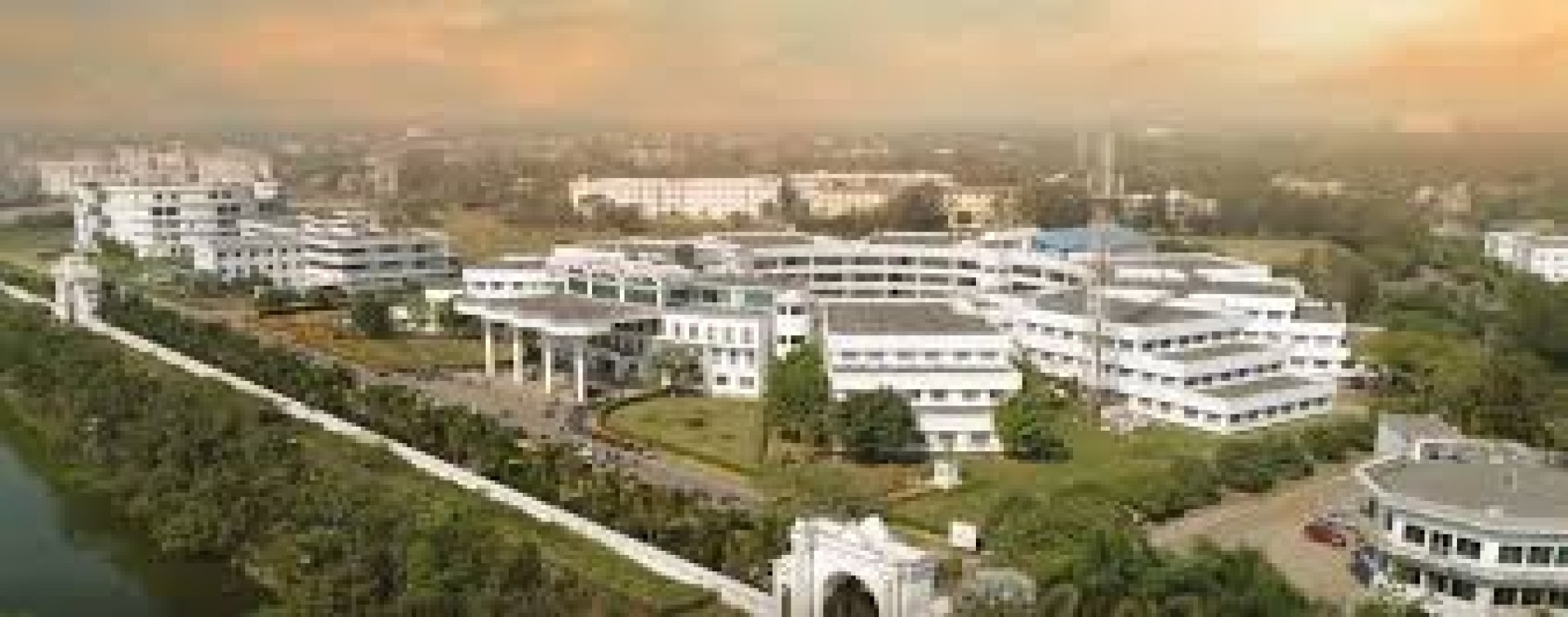
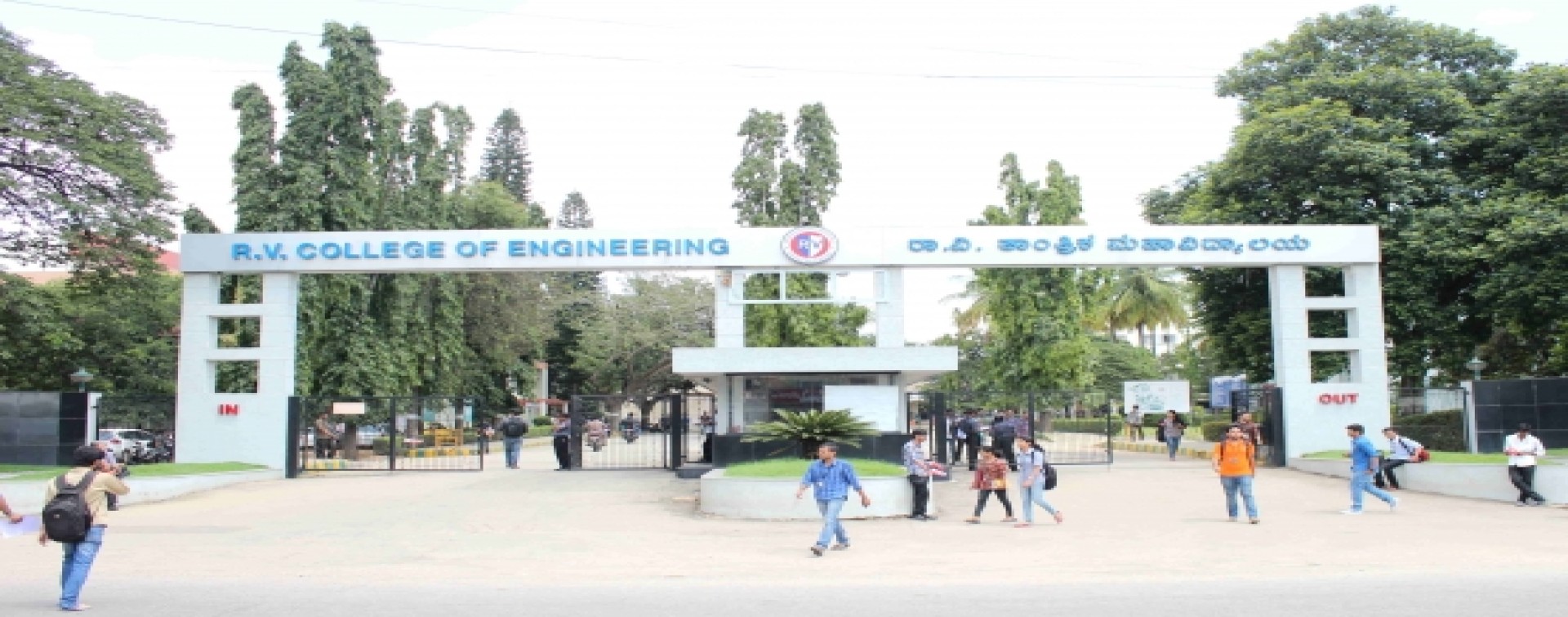
RVCE is a well-known engineering institute in Bengaluru, Karnataka, run by the not-for-profit Rashtreeya Sikshana Samithi Trust (RSST). It is an autonomous college affiliated to VTU (Belagavi), with long-standing programs, active research, and strong industry engagement.
Note: Figures and program lists can change year to year. Always verify final details with the official college sources before applying.
If you’re shortlisting colleges in Bengaluru for engineering, RVCE typically stands out for its autonomous academic structure, established departments, and a wide range of UG/PG options. Below are “at-a-glance” indicators to help you judge fit fast.
RVCE (R.V. College of Engineering) was established in 1963 and is among India’s early self-financing engineering colleges. It is run by RSST (Rashtreeya Sikshana Samithi Trust), a not-for-profit education trust.
The campus address commonly referenced for admissions and counselling is R.V. Vidyaniketan Post, Mysore Road, Bengaluru – 560059.
Vision (as stated by the institute):
Promote Education tip: When choosing a college, match your goals (placements, higher studies, research, entrepreneurship) with the department strength and program structure—not just overall reputation.
Rankings and accreditations don’t guarantee outcomes for every student, but they’re useful signals—especially when you combine them with department-level placements, labs, internships, and student projects.
Practical checklist: For your chosen branch, confirm (1) current NBA status (if applicable), (2) last year’s placement outcomes, (3) internship ecosystem, and (4) lab + project exposure.
RVCE offers a mix of core engineering branches and newer specializations. Below is a student-friendly snapshot based on official institute handbook listings and commonly published program lists.
Choosing tip: If your goal is software/tech placements, compare CSE/AI/DS/Cyber + ISE at the curriculum, labs, and internship level. For core branches, check industry tie-ups and project studios.
If you’re aiming for higher studies, research roles, or product-building, look for research centres, publications, funded projects, and industry-sponsored labs. RVCE reports active research centres and a growing innovation ecosystem.
Promote Education tip: Ask for department-wise research themes (AI, VLSI, robotics, sustainability, biotech etc.) and what undergraduate students can actually do—projects, labs, internships, and publications.
Your experience depends a lot on the campus environment—clubs, hackathons, labs, student teams, and access to support services. RVCE-related directories commonly list campus facilities like hostels, sports/gym, health centre, banking and internet-enabled campus services.
RVCE may be a strong fit if you want a structured engineering path in Bengaluru with a mix of academic autonomy, established departments, and a broad ecosystem for placements, internships, projects, and higher studies.
Not sure which branch is best for your goal (placements vs higher studies vs abroad)? We can shortlist based on your profile, budget range, and target career path.
Get a student-first shortlist: branch fit, expected cut-off band (by route), documents checklist, and a realistic timeline.
Last content refresh: Jan 2026. Source-backed summary intended for guidance; always verify final admissions rules and fees from official notifications.
This tab explains the main admission routes, eligibility basics, and the step-by-step process to secure a seat at RVCE. For final dates and seat matrices, always follow the official counselling calendars.
RVCE typically fills seats through merit counselling routes and (where applicable) institute-level/management route. The correct pathway depends on your course (UG/PG) and your entrance exam.
You must register on the counselling portal and follow their timeline.
Avoid unofficial agents; rely on official notices and portals.
Exact eligibility/cut-offs can differ by counselling authority, category and branch demand—use this as a starting point.
If you’re unsure which route applies to you, Promote Education can help you map the right pathway based on your domicile/category/exam score and preferred branch.
Login, complete counselling registration and pay the counselling fee as instructed by COMEDK.
Upload clear scanned documents; unclear/illegible uploads can be rejected.
Fill preferences, review mock allotment, then edit/reorder choices if needed.
Confirm allotted seat (as per options like accept/freeze) and complete fee payment online.
Report to the allotted college with required originals and allotment/fee receipts.
Follow KEA instructions carefully and keep your application, fee proof and admit card preserved.
Enter college/branch preferences within the counselling window and monitor updates daily.
After allotment, follow the reporting and document verification process at the allotted college.
Complete fee payments (as applicable) and admission formalities within the deadline.
RVCE indicates lateral entry admissions are done through the KEA DCET counselling route (as applicable). Lateral entry seats are limited and depend on vacancy/approval.
RVCE lists PG programs including MCA and M.Tech. Eligibility and entrance requirements can vary by program and category.
Document requirements can differ by route (KEA / COMEDK / Institute-level) and category. Keep these ready to avoid last-minute delays:
RVCE states that JEE Main scores are not considered for RVCE admissions, and it does not conduct its own entrance exam.
RVCE indicates UG admissions happen through KEA (merit counselling) and COMEDK (merit counselling), along with institute-notified management route where applicable.
COMEDK counselling typically includes registration & fee payment, document upload for online verification, choice filling, allotment, and reporting to the allotted college with required originals.
VTU’s published list includes R V College of Engineering, Bengaluru under autonomous colleges.
Disclaimer: Admission rules, eligibility and timelines can change. Always verify on the official RVCE website and the counselling portals (KEA/COMEDK) before you apply.
Explore RVCE’s UG (B.E.), PG (M.Tech & MCA) and Ph.D options in Bengaluru. This section is designed to help students and parents understand program choices quickly—branch focus, duration, eligibility basics and intake highlights.
RVCE offers multiple B.E. programs across core engineering, electronics and computing specializations. If you’re choosing a branch, shortlist based on your strengths (math/coding/physics), interest (software/core/analytics), and career goal (placements, higher studies, entrepreneurship).
Undergraduate • Duration: 48 months • Medium: English
A strong fit for students interested in aircraft systems, propulsion basics, structures, aerodynamics and design-focused projects.
Undergraduate • 48 months • English
Blends biology + engineering—useful for students aiming at bio-process, healthcare tech, R&D labs and higher studies.
Undergraduate • 48 months • English
For students interested in infrastructure, structures, transportation, materials, surveying and site-to-design workflows.
Undergraduate • 48 months • English
Covers process engineering fundamentals—useful for careers in manufacturing, energy, pharma and process design roles.
Undergraduate • 48 months • English
Power systems + electronics foundations—good for students interested in electrical machines, power electronics and controls.
Undergraduate • 48 months • English
A high-demand branch for electronics, communication, embedded basics and a pathway to VLSI, networks and related domains.
Undergraduate • 48 months • English
Best suited for students who like sensors, measurement systems, industrial instrumentation and control-oriented learning.
Undergraduate • 48 months • English
A blend of engineering + management fundamentals—useful for operations, quality, supply chain and analytics-aligned roles.
Undergraduate • 48 months • English
Software-focused learning track—commonly preferred by students targeting product roles, engineering teams and tech careers.
Undergraduate • 48 months • English
For students interested in analytics, data engineering basics, ML foundations and data-driven problem solving.
Undergraduate • 48 months • English
An AI-oriented CSE specialization—ideal for students who want an ML-first track alongside core CS foundations.
Undergraduate • 48 months • English
Security-focused computing track—useful for students interested in networks, secure systems and defensive security foundations.
Undergraduate • 48 months • English
Strong base for design, manufacturing, thermal systems and interdisciplinary roles in automotive, energy and product design.
Undergraduate • 48 months • English
A focused track around communication technologies—useful for students leaning toward networking, RF/comm concepts and electronics pathways.
Get a branch-fit shortlist based on your marks, interests and target career (placements vs higher studies).
RVCE offers multiple M.Tech specializations and an MCA program. PG is a good choice if you want deeper specialization, research exposure, or a strong academic base for advanced roles.
Postgraduate • Duration: 24 months • Eligibility: B.E./B.Tech • Medium: English
Specialization for engineering graduates interested in biotech applications, research methods and advanced lab-oriented learning.
Postgraduate • 24 months • B.E./B.Tech • English
For civil graduates focused on structural analysis, design concepts and research-oriented project work.
Postgraduate • 24 months • B.E./B.Tech • English
A specialization for transportation/highway engineering interests—materials, pavement concepts and infrastructure-focused learning.
Postgraduate • 24 months • B.E./B.Tech • English
For EEE/related graduates aiming at power converters, drives, energy systems and advanced electronics applications.
Postgraduate • 24 months • B.E./B.Tech • English
Electronics/communication-focused advanced program for deeper study in communication engineering concepts.
Postgraduate • 24 months • B.E./B.Tech • English
A popular specialization for chip/embedded pathways—useful for students targeting VLSI tools, embedded systems and related roles.
Postgraduate • 24 months • B.E./B.Tech • English
Advanced IT track—useful for students who want to deepen software systems knowledge with PG-level rigor.
Postgraduate • 24 months • B.E./B.Tech • English
Focuses on advanced software engineering practices—fit for students who want deeper tech leadership & systems thinking.
Postgraduate • 24 months • B.E./B.Tech • English
Advanced CS track—ideal for students targeting research-heavy software roles, higher studies, or deeper specialization.
Postgraduate • 24 months • B.E./B.Tech • English
A networking-oriented specialization—useful for students aiming at networks, systems, infrastructure and security-adjacent roles.
Postgraduate • 24 months • B.E./B.Tech • English
For mechanical graduates focused on design analysis, modeling and advanced product/mechanical systems learning.
Postgraduate • 24 months • B.E./B.Tech • English
A design + manufacturing specialization—useful for students who want product engineering and manufacturing-focused depth.
Postgraduate • 24 months • B.E./B.Tech • English
Communication specialization for deeper digital communication concepts and advanced electronics-oriented study.
Postgraduate • Duration: 24 months • Medium: English
A computing-focused postgraduate program for students who want a structured pathway into software/application development careers.
We’ll help you compare M.Tech vs job vs MS abroad—with a realistic branch-wise plan.
RVCE lists doctoral (Ph.D) research opportunities across multiple departments. If your goal is deep research, teaching, or R&D roles, you can explore department-wise research areas and supervisor availability.
Doctoral • Duration (listed): 60 months • Medium: English
Research programs are listed across engineering departments and sciences (examples include CSE, ECE, Mechanical, Civil, EEE, Biotechnology, MCA and others). Department themes and intake vary by research centre.
Student-first tip: If you’re considering Ph.D, shortlist by (1) research lab fit, (2) supervisor’s recent work, and (3) how your topic connects to your long-term career path.
Use this checklist to narrow down the right branch without overthinking:
Share your exam route + marks/rank + preferred stream, and we’ll suggest best-fit branches and counselling steps.
Disclaimer: Program names, intake and eligibility can change year to year based on approvals and notifications. Always verify the latest intake and admissions rules from official sources.
RVCE fees depend on your admission channel (KCET/KEA, COMEDK, Management, NRI/OCI/CIWG) and what’s included (tuition + university + other institutional fees). This page helps you estimate the yearly cost and understand what you’ll actually pay at each step.
Below are the latest publicly notified figures from counselling authorities. Exact payable amounts can vary if your allotment category/quotas change or if additional deposits/hostel apply.
For RVCE under COMEDK, the notified structure shows a fixed “Tuition Fee” plus “Other Fee” (institutional).
| Component | Amount (₹) |
|---|---|
| Tuition Fee (per year) | 2,81,100 |
| Other Fee (per year) | 20,000 |
| Total (per year) | 3,01,100 |
Shown in COMEDK’s notified list for RVCE (College Code: E095) across multiple UG programs. Always verify against the latest round document for the year you apply.
KEA categorizes unaided engineering colleges into Type-1 and Type-2. Your final payable fee for RVCE will appear on your KEA allotment details / fee order (it will match one of the two types below).
| Unaided College Category | General (GM/2A/2B/3A/3B)* | SNQ |
|---|---|---|
| Type-1 (Unaided Engineering) | 1,12,410 | 30,610 |
| Type-2 (Unaided Engineering) | 1,21,610 | 30,610 |
*KEA’s “General” column covers GM/2A/2B/3A/3B and other specified category conditions in the published sheet.
RVCE typically publishes separate admission circulars for these routes (branch-wise / quota-wise). Because fees can change yearly, we recommend checking the latest circular for your session and quota.
Always read your allotment letter/fee order to confirm line items.
Exact policies depend on the current circular and your program.
In Karnataka counselling, concessions can apply based on category/income slabs and special schemes (e.g., SNQ). Your eligibility is decided by the counselling authority rules and the documents you submit.
Last updated: Uses publicly available counselling notifications (COMEDK notified on 18-07-2025; KEA provisional structure labeled 2025–26). For the most current numbers, verify the latest official circular for your admission year.
Explore RVCE’s placement ecosystem—recruiter diversity, offer trends, salary indicators, and the career-readiness support that helps students transition from campus to industry. (Placements vary by branch, student profile, and market conditions.)
Note: “Offers” may include multiple offers per student. Salary figures can differ by role, location, and CTC structure.
RVCE reports a large recruiter base across IT, product engineering, core engineering, consulting, finance and R&D. Alongside placements, a portion of graduates also opt for higher studies.
Recent year-wise offer counts and participating companies (as cited in RVCE official document).
| Cycle | Offers | Companies |
|---|---|---|
| 2022–23 | 1267 | 269 |
| 2023–24 | 1155 | 281 |
| 2024–25 (ongoing) | 936 | 252 |
These figures are reported in RVCE documentation; ongoing cycles can increase as drives continue.
Government NIRF submission provides standardized placement + median salary indicators for previous years.
| Program | Academic Year | Placed | Median Salary | Higher Studies |
|---|---|---|---|---|
| UG (4-Year) | 2020–21 | 683 | ₹8,00,000 | 70 |
| UG (4-Year) | 2021–22 | 791 | ₹8,50,000 | 80 |
| UG (4-Year) | 2022–23 | 810 | ₹10,00,000 | 95 |
| PG (2-Year) | 2020–21 | 182 | ₹6,62,000 | 4 |
| PG (2-Year) | 2021–22 | 211 | ₹6,00,000 | 4 |
| PG (2-Year) | 2022–23 | 190 | ₹7,00,000 | 3 |
Median salary is a strong “middle-value” indicator (less affected by outliers than highest-package headlines).
RVCE’s official documents mention recruiters across product, consulting, finance, manufacturing, aerospace and R&D. Examples include Microsoft, Goldman Sachs, PayPal, Qualcomm, Walmart, Deloitte, KPMG, Infosys, Boeing, Airbus and more.
Tip: Always evaluate recruiter fit by role (SDE/Core/Analyst), CTC breakup, location, and growth track.
RVCE describes a structured skill-development approach that progresses from fundamentals to industry tools, advanced tech exposure via Centers of Excellence, and project/research-oriented final-year work.
This pathway aims to improve placement readiness and real-world project confidence.
Your outcomes depend on consistency: skills, communication, portfolio depth, and interview practice.
Exact hiring mix changes every year. Below is an indicative view of common domains based on the recruiter categories mentioned in RVCE documents.
For best results, align your preparation with your branch + target role: SDE, Embedded, VLSI, Core Mechanical, Structural, Data/BI, or Consulting.
Disclosure: This page is an informational summary for students/parents. For the latest official numbers, refer to RVCE’s official documents and NIRF submissions. Placements are not guaranteed and depend on student performance and eligibility.
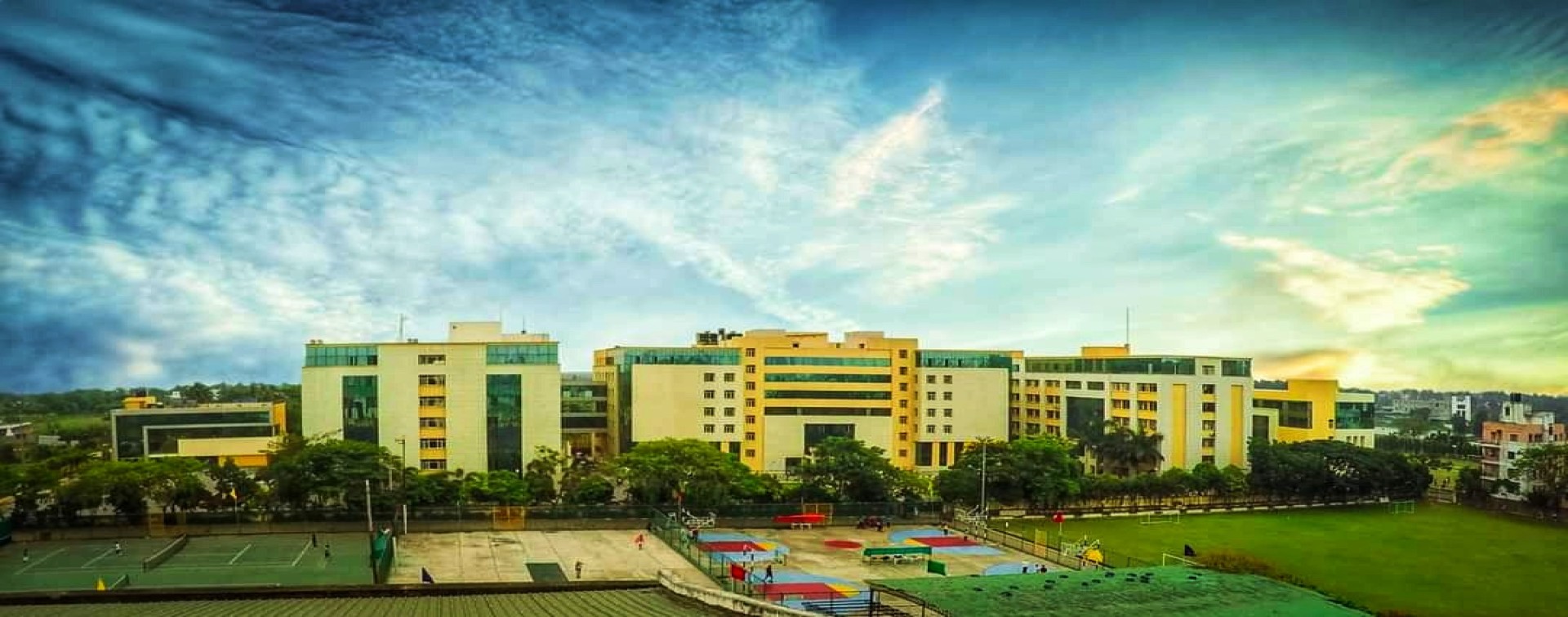
A student-first look at RVCE’s campus infrastructure—learning spaces, dining, sports, hostels, transport, and everyday services—so you can quickly understand what campus life feels like.
Quick overview of key campus utilities most students ask about before joining.
| Facility | What you get | Why it matters |
|---|---|---|
| Food Court | Cafe Mingos: 2 floors, indoor/outdoor seating for 1,000+; diverse cuisines; hygiene-focused operations | Easy, campus-friendly meals between classes and labs |
| Library | Large print + digital collection; remote access to e-resources (where applicable) | Stronger study support for exams, projects, research |
| Sports & Gym | Outdoor courts/grounds + indoor games + modern gym support | Fitness + stress management + holistic campus life |
| Hostel | On-campus residential option with essential utilities and student-life support | Convenience for outstation students |
| Transport | Organised bus service with GPS tracking + city pickup/drop points | Safer, predictable daily commute |
| Everyday Services | Post office, health centre, banking facility, auditorium/seminar spaces | Students don’t need to step out for basics |
RVCE’s on-campus food court is designed for high student footfall—with large seating capacity, multiple cuisines, and quick service options.
Two floors with indoor and outdoor seating for over 1,000 people.
Options typically include North Indian, South Indian, Chinese, burgers, sandwiches, chats, and hot/cold beverages.
Hygiene and safety processes are positioned around food standards; self-service billing helps reduce waiting time during peak hours.
A common “meet-up zone” between classes—useful for group discussions, club planning, and quick breaks.
The library is positioned as a core academic hub—supporting coursework, competitive prep, and project/research work through print + digital access.
| Legacy | Operating since 1963 (as stated by the institute’s library page). |
|---|---|
| Collection size | 189,000+ resources across print and digital materials (as stated by the institute). |
| Digital access | E-books, journals, and multimedia with on-campus and (where enabled) remote access. |
| Best use-cases | Semester exams, lab records/project references, technical papers, and higher-studies prep. |
RVCE highlights holistic development through organised sports, indoor recreation, and a modern gym setup.
Cricket, football, basketball, volleyball, tennis, athletics (as listed by RVCE).
Badminton, table tennis, chess, carrom, and other activities (as listed by RVCE).
Fitness machines, free weights, and cardio equipment, with trainer guidance mentioned by the institute.
Supports routine fitness, team culture, and stress relief—especially during exams and project deadlines.
RVCE’s hostel support is built for outstation students who want a campus-based routine and faster access to academic blocks.
| Core utilities | 24×7 water and electricity availability is highlighted on the hostel page. |
|---|---|
| Dining | Multi-cuisine vegetarian mess is highlighted on the hostel page. |
| Connectivity | Wi-Fi facility is highlighted on the hostel page. |
| Campus integration | Sports and on-campus services reduce the need to travel outside frequently. |
Tip: For exact hostel rules (timings, allotment, fee, and availability), always confirm on the official hostel notice/page.
For students commuting from different parts of Bengaluru, the institute describes an organised bus service designed to improve safety and predictability.
Fleet of 5 buses covering 77 pickup/drop points across five major city locations.
Live GPS tracking monitored centrally + 360-degree camera surveillance (as stated by RVCE).
Facilities that save time on errands—especially useful for hostel residents and students with tight schedules.
On-campus postal facility with Speed Post, registered post, parcels, and money orders.
Guidance documents mention support for minor ailments and first aid through the institute health center.
A bank facility is listed among campus services for student convenience.
Spaces for guest talks, seminars, cultural events, and academic presentations.
RVCE presents its campus as “sustainable and future-ready,” combining infrastructure with environmental responsibility.
| Theme | Initiatives mentioned |
|---|---|
| Clean water & reuse | Rainwater harvesting + sewage treatment plant (STP) are highlighted under sustainability. |
| Energy | Solar street lights are listed among initiatives. |
| Accessibility | Facilities mention support such as lifts and electric buggies for mobility assistance. |
| Campus culture | 3Rs (Reduce, Reuse, Recycle) approach is highlighted in the sustainability section. |
Get a student-first counselling call: eligibility check, entrance pathway clarity, and document guidance.
Note: Facilities and policies can change year to year. For the latest official updates, verify on RVCE’s official website.
A balanced, people-first snapshot of student feedback (from major review platforms) combined with a quick reality-check using published institutional datasets. Use this to decide if RVCE matches your goals, branch, and learning style.
Note: Ratings can change over time as new reviews are added. Always read reviews from your target branch + batch year before deciding.
Across platforms, students frequently describe RVCE as academically rigorous and placement-focused. The best experience tends to come when you actively use labs, clubs, internships, and career support early—rather than waiting until final year.
Tip: Treat “highest package” claims in reviews as anecdotal unless they’re published in an official placement report.
Best practice: filter reviews by branch + batch year. A CSE review may not match Civil/Mechanical outcomes and experience.
These are short, paraphrased summaries of recurring points from student reviews on major platforms—meant to be readable, not “copy-pasted” quotes. Always cross-check the original reviews before deciding.
Placement-first culture: Many students say the campus drive ecosystem is a major advantage—especially if you start building skills and projects early.
Academics can be intense: Reviews commonly describe a structured curriculum and busy semesters—great for discipline, but time management becomes essential.
Infrastructure is a plus: Labs/library and classroom learning resources are frequently appreciated, with some students noting ongoing upgrades.
Hostel/amenities vary: Some students are happy, while others flag Wi-Fi/food/comfort as areas that can feel inconsistent by block or year.
If hostel matters to you, try a quick on-ground check (or talk to current students) before finalizing.
🌟 Promote Education Review – RV College of Engineering (RVCE), Bangalore Overview R.V. College of Engineering (RVCE) is one of the top private engineering colleges in Karnataka, established in 1963 and affiliated with VTU. Located on Mysore Road, Bangalore, it is known for academic excellence, strong placements, and a vibrant campus life. 🏫🌏
RV College of Engineering (RVCE) is located at RV Vidyanikethan Post, Mysuru Road, Bengaluru – 560059, This address is useful for reporting during counselling / admission and for commute planning
RVCE’s official admissions page highlights two primary UG routes: - KEA (Government Quota) — via KEA counselling (KCET/KEA process as applicable). - COMEDK Quota — via COMEDK counselling. Exact eligibility, timelines, and seat allotment rules are controlled by the counselling authorities each year.
Yes. RVCE is listed as an autonomous institution and is affiliated to VTU (Visvesvaraya Technological University) in COMEDK’s official college profile information.
RVCE offers undergraduate and postgraduate programs. COMEDK’s profile notes RVCE has 12 bachelor and 16 master programs, along with research centers (VTU affiliation). Tip: For the most current branch list, intake, and specializations, check RVCE’s official “Programmes” page before you finalize your shortlist.
In NIRF 2025 (Engineering), RV College of Engineering is listed in the Rank Band 101–150. Use NIRF as a standardized comparison, then evaluate branch-wise outcomes, fees, and fit.
As per RVCE’s NIRF 2024 institutional data submission (UG 2022–23 cohort), RVCE reported 810 students placed with a median salary of ₹10,00,000. Note: Placement outcomes vary by branch and market conditions. Always review department-wise stats and talk to seniors/alumni.
RVCE’s official FAQ indicates hostel facilities are available, and hostel rooms are not air-conditioned. Hostel availability and allocation depend on Institute's rules and capacity.
RVCE’s FAQ / admissions guidance states that hostel booking can be made only after the final admission process on campus is completed. Advance bookings before admission are not permitted.
Yes, RVCE’s transport facility page mentions a fleet of 5 buses covering 77 pick-up and drop points, and notes live GPS tracking for safety monitoring.
RVCE publishes scholarship-related information, including a document listing scholarships from various agencies. In addition, RVCE’s sports scholarship page lists support amounts for university/state/national representation. Tip: Scholarship criteria and availability can change year to year—apply early and keep documents ready.
RVCE’s FAQ page points students to official sources for placement details. A reliable approach is: - Check RVCE’s placement pages / department placement pages (for branch-wise snapshots). - Cross-check outcomes with RVCE’s NIRF data submissions (median salary, placed count).
Use a 3-step method: - Shortlist branches based on your interest + career path (not only “highest package”). - Check counselling round-wise closing ranks for your quota (KEA / COMEDK) and keep 2–3 backup options. - Validate with seniors/alumni + placement trends + curriculum fit (autonomous syllabus can change).
We help you with college & branch shortlisting, counselling document readiness, and backup planning based on your rank, quota, budget, and career goals—so you avoid last-minute mistakes during option entry and reporting. "Talk to a counsellor"
No images available.